

| Distributor | Stock | Pricing | MOQ | PKG | Lead Time | Date Code | On Order Quantity | On Order Delivery | |
|---|---|---|---|---|---|---|---|---|---|
|
254,648 pcs
|
254648 pcs | On Request | 1 | On Request | On Request | On Request | On Request | On Request |
| Category | |
| Manufacturer Name | |
| Clock Frequency | |
| Current | |
| Function | |
| Halogen Free | |
| Input Capacitance | |
| Max Propagation Delay @ V, Max CL | |
| Mounting Type | |
| Number of Bits per Element | |
| Number of Elements | |
| Operating Temperature | |
| Output Type | |
| Supplier Device Package | |
| Supplier Package | |
| Trigger Type | |
| Type | |
| Voltage |
The SN74LVC574APW from Texas Instruments is an octal edge-triggered D-type flip-flop designed for 1.65-V to 3.6-V VCC operation. This device features 3-state outputs suitable for driving capacitive or low-impedance loads, making it ideal for buffer registers, I/O ports, and bidirectional bus drivers.
Key electrical characteristics include a maximum propagation delay of 6.8 ns at 3.3V and 50pF, a clock frequency of 150 MHz, and a quiescent current of 10 µA. The flip-flop operates with a voltage range of 1.65V to 3.6V and accepts input voltages up to 5.5V, supporting mixed-mode signal operation.
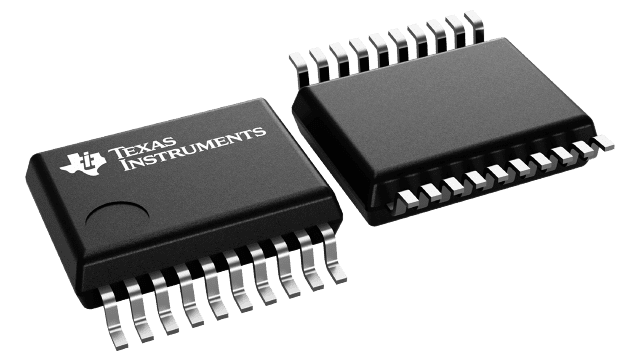
This component is specified for operation from -40°C to 125°C (TA). It is housed in a 20-TSSOP surface-mount package, measuring 4.40mm in width. The outputs are non-inverted and tri-state, with an output enable (OE) input that can place the outputs in a high-impedance state without affecting internal flip-flop operations.
| Qty | Low | High |
|---|---|---|
| 1+ | $0.86 | $0.86 |
Estimated market price range - modelled values for guidance only, not live distributor offers.
The operating voltage range is 1.65V to 3.6V.
The device is supplied in a 20-TSSOP package and is designed for surface mounting.
The operating temperature range is -40°C to 125°C.
The maximum clock frequency is 150 MHz.
The maximum propagation delay is 6.8 ns at 3.3V and 50pF load.
The device provides tri-state, non-inverted outputs.
The flip-flop is triggered on the positive edge.