

| Distributor | Stock | Pricing | MOQ | PKG | Lead Time | Date Code | On Order Quantity | On Order Delivery | |
|---|---|---|---|---|---|---|---|---|---|
|
1,732 pcs
|
1732 pcs | On Request | 1 | On Request | On Request | 05+ | On Request | On Request | |
|
128 pcs
|
128 pcs | On Request | 1 | On Request | On Request | On Request | On Request | On Request | |
|
88 pcs
|
88 pcs | On Request | 1 | On Request | On Request | 2026-02-25 06:16:38 | On Request | On Request |
| Category | |
| Manufacturer Name | |
| AEC Qualified | |
| Automotive Grade | |
| Current | |
| Industrial Grade | |
| Logic Type | |
| Medical Grade | |
| Military Grade | |
| Mounting Type | |
| Number of Bits per Element | |
| Number of Elements | |
| Operating Temperature | |
| Output Type | |
| Supplier Device Package | |
| Voltage | |
| Voltage Supply |
The SN74LVC541ADW from Texas Instruments is an octal buffer/driver designed for 1.65V to 3.6V VCC operation. This device features eight non-inverting buffers with 3-state outputs, controlled by active low output enable pins OE1 and OE2.
Key electrical characteristics include a supply voltage range of 1.65V to 3.6V, with inputs capable of accepting voltages up to 5.5V. The output current is specified at ±24mA for both high and low states. It offers a maximum propagation delay of 5.1 ns at 3.3V.
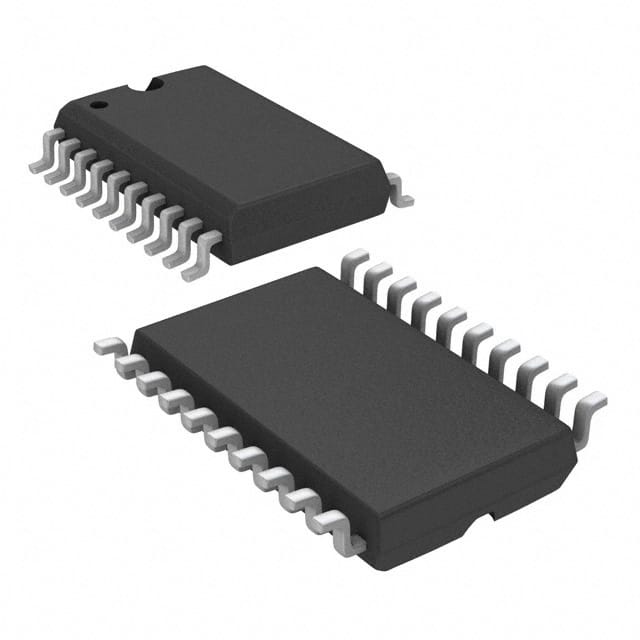
This buffer is housed in a 20-SOIC package, suitable for surface mounting. The operating temperature range is -40°C to 125°C (TA). The device supports mixed-mode signal operation and features Ioff for live insertion, partial-power-down mode, and back-drive protection.
Applications for the SN74LVC541ADW include servers, PCs, notebooks, network switches, wearable health and wellness devices, telecom infrastructures, and electronic points of sale.
| Qty | Low | High |
|---|---|---|
| 1+ | $0.50 | $0.50 |
Estimated market price range - modelled values for guidance only, not live distributor offers.
The SN74LVC541ADW operates within a voltage range of 1.65V to 3.6V.
It comes in a 20-SOIC surface-mount package.
The maximum propagation delay is 5.1 nanoseconds at 3.3V.
The device operates from -40°C to 125°C.
RoHS compliance status is unverified; treat as low-confidence.