

| Distributor | Stock | Pricing | MOQ | PKG | Lead Time | Date Code | On Order Quantity | On Order Delivery | |
|---|---|---|---|---|---|---|---|---|---|
|
5,519 pcs
|
5519 pcs | On Request | 1 | On Request | On Request | On Request | On Request | On Request | |
|
1,574 pcs
|
1574 pcs | On Request | 1 | On Request | On Request | On Request | On Request | On Request | |
|
670 pcs
|
670 pcs | On Request | 1 | On Request | On Request | On Request | On Request | On Request |
| Category | |
| Manufacturer Name | |
| Current | |
| Features | |
| Input Logic Level | |
| Input Voltage | |
| Latch-up Performance | |
| Logic Type | |
| Max Propagation Delay @ V, Max CL | |
| Mounting Type | |
| Number of Circuits | |
| Number of Inputs | |
| Operating Temperature | |
| Supplier Device Package | |
| Voltage |
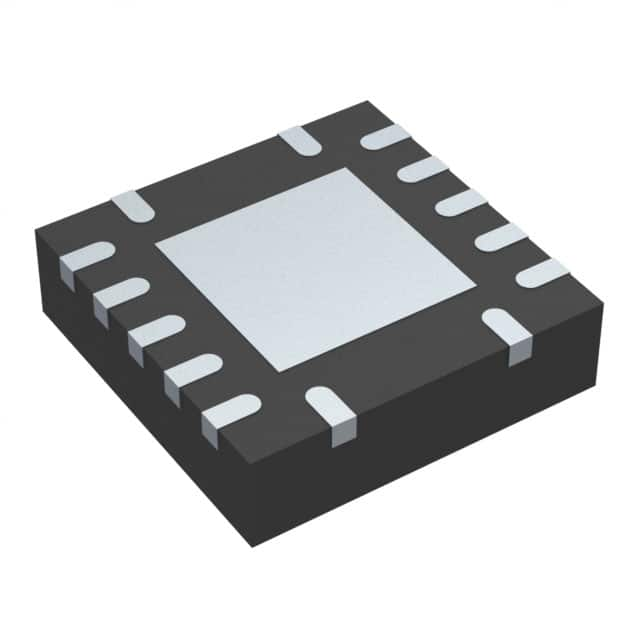
The SN74LVC14ARGYR from Texas Instruments is a hex Schmitt-trigger inverter IC. It is designed to operate within a voltage range of 1.65V to 3.6V, making it suitable for various applications.
This device features six independent inverters, each with Schmitt-trigger inputs, providing noise immunity. The maximum propagation delay is 6.2ns at 3.3V with a 50pF load. The inputs can accept voltages up to 5.5V, allowing for interfacing with mixed 3.3V and 5V systems.
Packaged in a 14-VQFN (3.5x3.5) with an exposed pad, the SN74LVC14ARGYR is designed for surface mounting. It operates within a temperature range of -40°C to 85°C. The component offers robust ESD protection, exceeding 2000V for the human-body model.
Key electrical characteristics include a supply voltage range of 1.65V to 3.6V and a maximum propagation delay of 6.2ns. The device is suitable for applications requiring signal conditioning and level shifting in mixed-voltage environments.
| Qty | Low | High |
|---|---|---|
| 1+ | $0.15 | $0.15 |
Estimated market price range - modelled values for guidance only, not live distributor offers.
1.65V to 3.6V.
-40°C to 125°C.
14-VQFN (3.5x3.5mm) with exposed pad.
6.2ns maximum at 3.3V with 50pF load.
Yes, it features Schmitt-trigger inputs for noise immunity.
24mA per channel.