

| Distributor | Stock | Pricing | MOQ | PKG | Lead Time | Date Code | On Order Quantity | On Order Delivery | |
|---|---|---|---|---|---|---|---|---|---|
|
1,980 pcs
|
1980 pcs | On Request | 1 | On Request | On Request | On Request | On Request | On Request |
| Category | |
| Manufacturer Name | |
| Count Rate | |
| Direction | |
| ESD Protection | |
| Features | |
| Function | |
| Industrial Grade | |
| Input Type | |
| Latch-up Performance | |
| Lead Spacing | |
| Lead Style | |
| Logic Type | |
| Mounting Type | |
| Number of Bits per Element | |
| Number of Elements | |
| Operating Temperature | |
| Output Type | |
| Reset | |
| Supplier Device Package | |
| Supplier Package | |
| Timing | |
| Trigger Type | |
| Voltage |
The SN74LV161APW from Texas Instruments is a 4-bit synchronous binary counter designed for 2V to 5.5V VCC operation. These synchronous, presettable counters feature an internal carry look-ahead for application in high-speed counting designs. Synchronous operation is provided by having all flip-flops clocked simultaneously.
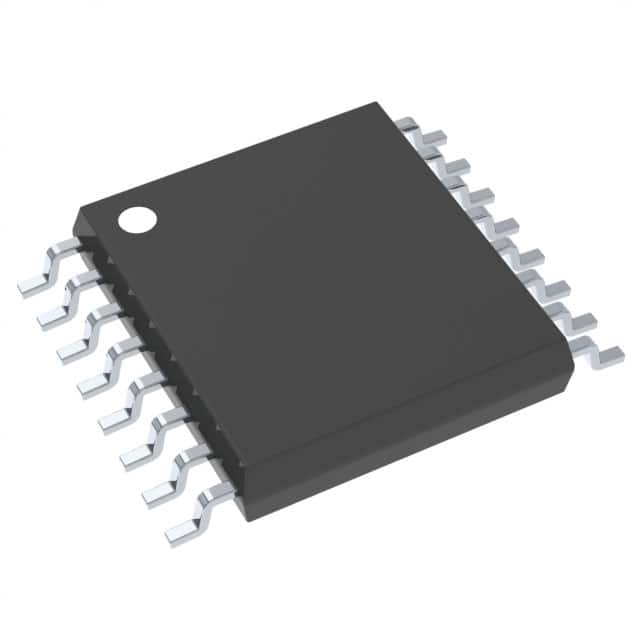
Key electrical characteristics include a supply voltage range of 2V to 5.5V and a maximum propagation delay of 9.5 ns at 5V. The counter operates within a temperature range of -40°C to 85°C. It is available in a 16-TSSOP package and supports surface mount.
Features such as balanced outputs, over-voltage tolerant inputs, and partial power-down (Ioff) make this counter suitable for various digital logic applications. The internal look-ahead logic enables fast counting, and a carry output allows for n-bit cascading. The device also supports mixed-mode voltage operation on all ports.
| Qty | Low | High |
|---|---|---|
| 1+ | $0.44 | $0.44 |
Estimated market price range - modelled values for guidance only, not live distributor offers.
The SN74LV161APW operates from a 2V to 5.5V supply voltage.
The SN74LV161APW operates between -40°C and 85°C.
The SN74LV161APW is available in a 16-TSSOP package.
The SN74LV161APW is RoHS3 Compliant.
The MSL for the SN74LV161APW is 1 Unlimited.
The maximum propagation delay is 9.5 ns at 5V.