

| Distributor | Stock | Pricing | MOQ | PKG | Lead Time | Date Code | On Order Quantity | On Order Delivery | |
|---|---|---|---|---|---|---|---|---|---|
|
2,500 pcs
|
2500 pcs | On Request | 1 | On Request | On Request | On Request | On Request | On Request | |
|
175 pcs
|
175 pcs | On Request | 1 | On Request | On Request | 17+ | On Request | On Request | |
|
27 pcs
|
27 pcs | On Request | 1 | On Request | On Request | On Request | On Request | On Request | |
|
11 pcs
|
11 pcs | On Request | 1 | On Request | On Request | On Request | On Request | On Request |
| Category | |
| Manufacturer Name | |
| Count Rate | |
| Direction | |
| Logic Type | |
| Mounting Type | |
| Number of Bits per Element | |
| Number of Elements | |
| Operating Temperature | |
| Reset | |
| SVHC Present | |
| Supplier Device Package | |
| Supplier Package | |
| Supply Current | |
| Trigger Type | |
| Voltage |
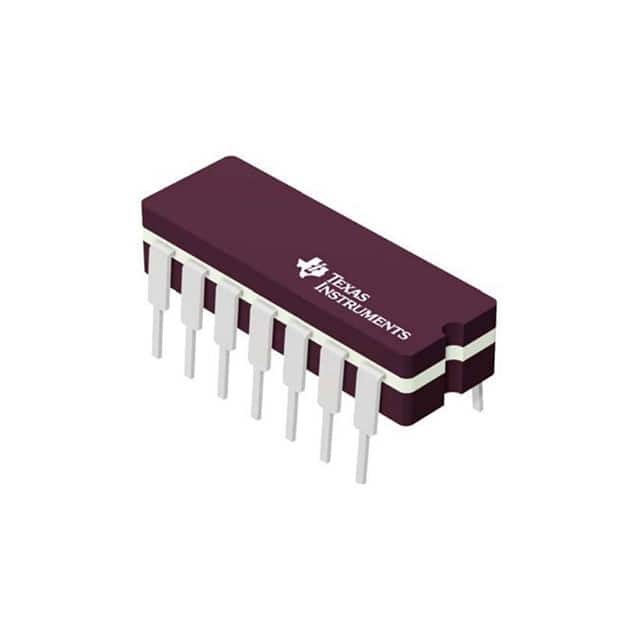
The SN74HC393N is a dual 4-bit binary counter IC manufactured by Texas Instruments. It contains eight flip-flops and additional gating to implement two independent 4-bit counters within a single package. This device is designed for a wide operating voltage range of 2V to 6V and operates across a temperature range of -40°C to 85°C.
Key electrical characteristics include a typical propagation delay of 13ns, a low supply current of 80μA maximum, and an input current of 1μA maximum. The outputs can drive up to 10 LSTTL loads, with a typical output drive of ±4mA at 5V. The counter features asynchronous reset and negative edge triggering.
Packaged in a 14-pin PDIP through-hole configuration, the SN74HC393N is suitable for applications requiring compact counter solutions. Its design can help reduce counter package count by up to 50%, improving system density. The device offers direct clear functionality for each 4-bit counter.
| Qty | Low | High |
|---|---|---|
| 1+ | $0.22 | $0.22 |
Estimated market price range - modelled values for guidance only, not live distributor offers.
2V to 6V.
14-DIP (0.300", 7.62mm).
-40°C to 85°C.
13ns.
36 MHz.
Negative edge.
Yes, the reset is asynchronous.