

| Distributor | Stock | Pricing | MOQ | PKG | Lead Time | Date Code | On Order Quantity | On Order Delivery | |
|---|---|---|---|---|---|---|---|---|---|
|
106,353 pcs
|
106353 pcs | On Request | 1 | On Request | On Request | On Request | On Request | On Request |
| Category | |
| Manufacturer Name | |
| Bandwidth | |
| Circuit | |
| Configuration | |
| Independent Circuits | |
| Latch-up Performance | |
| Mounting Type | |
| Number of Channels | |
| Operating Temperature | |
| Operating Voltage | |
| Supplier Device Package | |
| Supplier Package | |
| Supply Current | |
| Type | |
| Voltage | |
| Voltage Supply Source |
The SN74CB3Q3305PWRE4 from Texas Instruments is a dual FET bus switch featuring a 1:1 SPST configuration with two independent channels. This device is engineered for high-bandwidth data paths, supporting frequencies up to 500 MHz, making it suitable for various signal switching applications.
Key electrical characteristics include a low ON-state resistance of typically 3 Ω and a maximum of 9 Ω across the operating range. The input/output voltage can range from 0V to 5.5V, with 5V tolerant I/Os. It operates with a supply voltage range of 2.3V to 3.6V and consumes a low supply current of typically 250 µA.
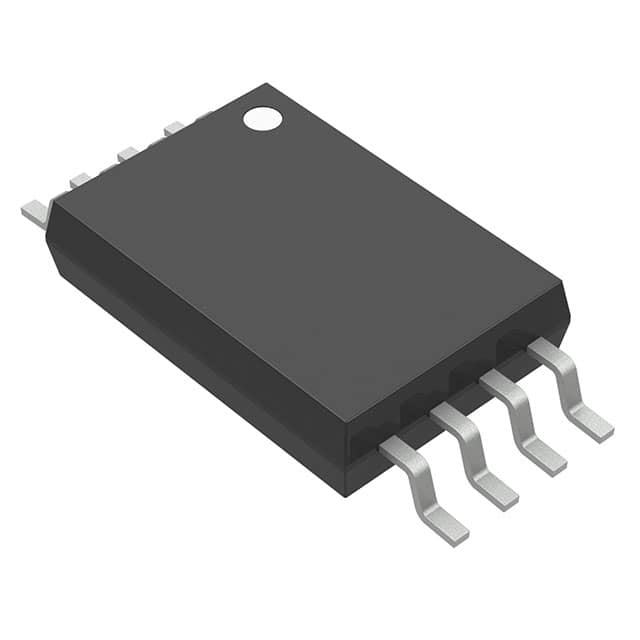
The device supports bidirectional data flow with near-zero propagation delay. It is available in an 8-TSSOP package, designed for surface mounting. The operating temperature range is -40°C to 85°C.
This bus switch is compatible with protocols such as Analog, I2C, and UART, and its control inputs can be driven by TTL or 5V/3.3V CMOS outputs. It also supports partial power-down mode operation.
| Qty | Low | High |
|---|---|---|
| 1+ | $1.27 | $1.27 |
Estimated market price range - modelled values for guidance only, not live distributor offers.
The operating voltage range is 2.3 V to 3.6 V.
The operating temperature range is -40°C to +85°C.
It is available in an 8-TSSOP package.
The typical bandwidth is 500 MHz.
The typical on-resistance is 3 Ω.
It has 2 channels.
It supports analog, I2C, and UART protocols.