

| Distributor | Stock | Pricing | MOQ | PKG | Lead Time | Date Code | On Order Quantity | On Order Delivery | |
|---|---|---|---|---|---|---|---|---|---|
|
90,400 pcs
|
90400 pcs | On Request | 1 | On Request | On Request | On Request | On Request | On Request |
| Category | |
| Manufacturer Name | |
| Bandwidth | |
| Channel | |
| Channel Capacitance (CS(off), CD(off)) | |
| Configuration | |
| Crosstalk | |
| Current | |
| Latch-up Performance | |
| Lead Spacing | |
| Mounting Type | |
| Multiplexer | |
| Number of Circuits | |
| On | |
| Operating Temperature | |
| Supplier Device Package | |
| Supplier Package | |
| Switch Circuit | |
| Switch Time (Ton, Toff) (Max) | |
| Voltage |
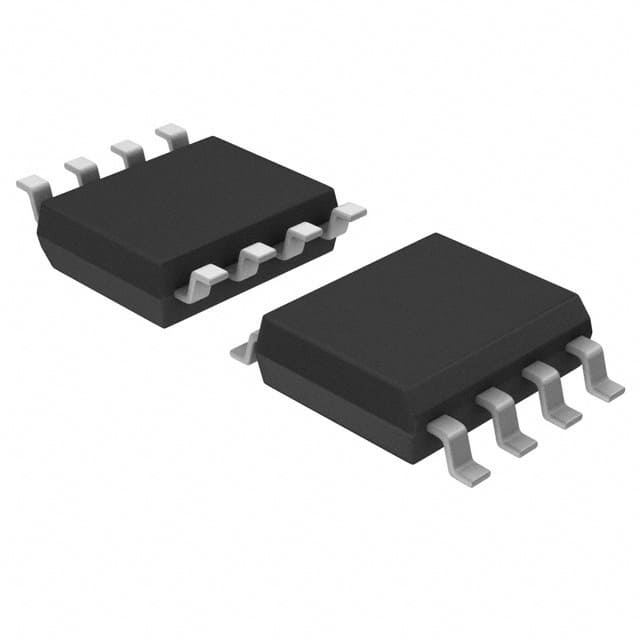
The SN74AUC2G53DCTR from Texas Instruments is a single-channel, 2:1 single-pole double-throw (SPDT) analog switch. This device is designed for operation with supply voltages ranging from 0.8V to 2.7V, with specific optimization for 1.1V to 2.7V VCC.
Key electrical characteristics include a typical on-resistance of 6 Ohms and a maximum on-resistance of 1 Ohm. It boasts a wide bandwidth of 500MHz, making it suitable for various signal routing applications. The switch features low power consumption, drawing only 10µA at 2.7V, and a fast switching time of 2.2ns.
This analog switch is available in an 8-pin LSSOP or MSOP package and is designed for surface mount applications. It offers robust ESD protection, exceeding 2000V on the Human-Body Model, and latch-up performance beyond 100mA per JESD 78, Class II.
Applications for the SN74AUC2G53DCTR include signal gating, chopping, modulation, demodulation, and signal multiplexing in analog-to-digital and digital-to-analog conversion systems.
| Qty | Low | High |
|---|---|---|
| 1+ | $0.29 | $0.29 |
Estimated market price range - modelled values for guidance only, not live distributor offers.
The SN74AUC2G53DCTR operates from 0.8V to 2.7V.
It is available in an 8-pin LSSOP or 8-pin MSOP package.
The operating temperature range is -40°C to 85°C.
The typical on-resistance is 6 Ohms.
The bandwidth is 500MHz.
It exceeds 2000V for the Human-Body Model, 200V for the Machine Model, and 1000V for the Charged-Device Model.