

| Distributor | Stock | Pricing | MOQ | PKG | Lead Time | Date Code | On Order Quantity | On Order Delivery | |
|---|---|---|---|---|---|---|---|---|---|
|
25,829 pcs
|
25829 pcs | On Request | 1 | On Request | On Request | On Request | On Request | On Request | |
|
838 pcs
|
838 pcs | On Request | 1 | On Request | On Request | On Request | On Request | On Request |
| Category | |
| Manufacturer Name | |
| Current | |
| ESD Protection | |
| Features | |
| Input Type | |
| Latch-up Performance | |
| Logic Type | |
| Mounting Type | |
| Number of Channels | |
| Number of Circuits | |
| Operating Temperature | |
| Operating Voltage | |
| Output Type | |
| Supplier Device Package | |
| Voltage |
The SN74ALVCH16901DGGR is an 18-bit universal bus transceiver manufactured by Texas Instruments. This device is designed for operation with a supply voltage ranging from 1.65V to 3.6V. It features 3-state outputs, providing flexibility in bus interfacing.
The transceiver operates across a temperature range of -40°C to 85°C, making it suitable for various environmental conditions. Key specifications include an output drive current of ±24mA at 3.3V and a maximum propagation delay of 4.4 ns at 3.3V. The device also incorporates features such as balanced outputs, bus-hold functionality, and a positive input clamp diode for enhanced performance.
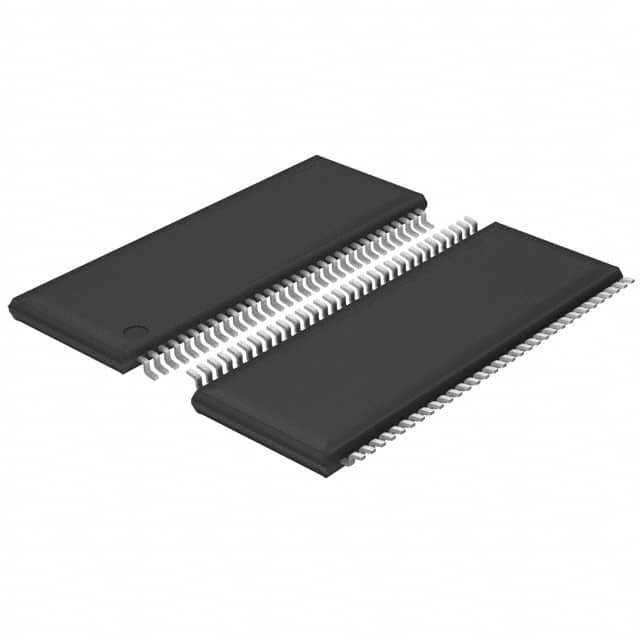
Packaged in a 64-TSSOP, the SN74ALVCH16901DGGR is designed for surface mount applications. Its robust construction and adherence to standard operating conditions make it a reliable component for digital logic systems requiring high-speed data transfer and bus management.
| Qty | Low | High |
|---|---|---|
| 1+ | $1.71 | $1.71 |
Estimated market price range - modelled values for guidance only, not live distributor offers.
It operates from 1.65V to 3.6V.
It is available in a 64-TSSOP and 64-TFSOP surface mount package.
The operating temperature range is -40°C to 85°C.
It is a universal bus transceiver.
The output drive current is ±24mA at 3.3V.
The maximum propagation delay is 4.4 ns at 3.3V.
It is part of the ALVC technology family.