

| Distributor | Stock | Pricing | MOQ | PKG | Lead Time | Date Code | On Order Quantity | On Order Delivery | |
|---|---|---|---|---|---|---|---|---|---|
|
6,413 pcs
|
6413 pcs | On Request | 1 | On Request | On Request | On Request | On Request | On Request | |
|
2,000 pcs
|
2000 pcs | On Request | 1 | On Request | On Request | 414 | On Request | On Request | |
|
319 pcs
|
319 pcs | On Request | 1 | On Request | On Request | 0731+ | On Request | On Request |
| Category | |
| Manufacturer Name | |
| Current | |
| Logic Type | |
| Mounting Type | |
| Number of Bits per Element | |
| Number of Elements | |
| Operating Temperature | |
| Operating Voltage | |
| Output Type | |
| Propagation Delay | |
| Supplier Device Package | |
| Supplier Package | |
| Voltage |
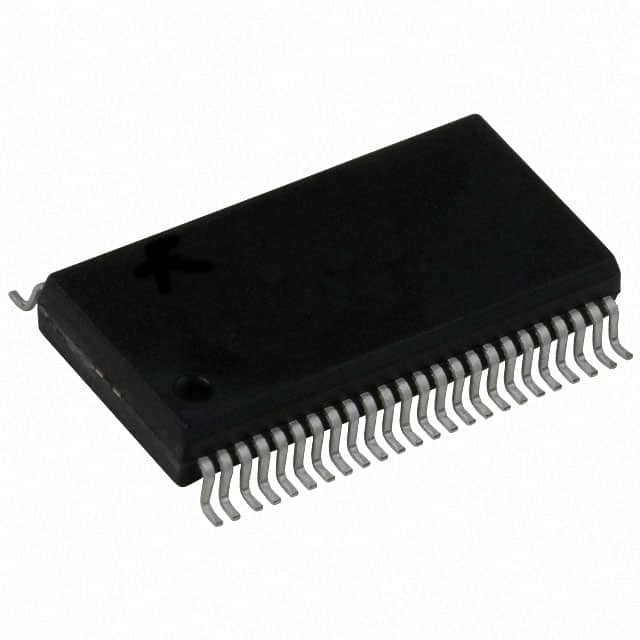
The SN74ALVCH16245DGGR is a 16-bit, dual-octal, non-inverting bus transceiver from Texas Instruments, part of the Widebus™ family. It is designed for asynchronous communication between two data buses and supports a wide operating voltage range from 1.65V to 3.6V.
This transceiver features 3-state outputs, allowing ports to be placed in a high-impedance mode. The direction-control (DIR) and output-enable (OE) inputs manage data flow between the A and B ports. With a maximum propagation delay of 3 ns at 3.3V and an output drive of ±24 mA at 3.3V, it is suitable for various applications.
The device includes active bus-hold circuitry on its inputs, eliminating the need for external pullup or pulldown resistors. It is supplied in a 48-TSSOP package, suitable for surface mounting.
Key applications include cable modem termination systems, servers, LED displays, network switches, telecom infrastructure, motor drivers, and I/O expanders.
| Qty | Low | High |
|---|---|---|
| 1+ | $1.20 | $1.20 |
Estimated market price range - modelled values for guidance only, not live distributor offers.
1.65V to 3.6V.
48-TSSOP (Thin Shrink Small Outline Package) surface mount package.
-40°C to 85°C.
±24mA at 3.3V.
3 ns maximum at 3.3V.
Non-inverting transceiver with 3-state outputs.
16 bits, organized as two 8-bit elements.