

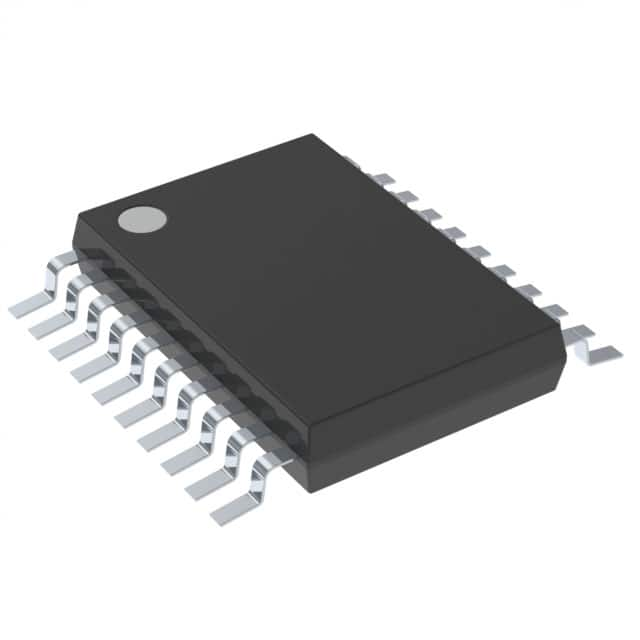
| Distributor | Stock | Pricing | MOQ | PKG | Lead Time | Date Code | On Order Quantity | On Order Delivery | |
|---|---|---|---|---|---|---|---|---|---|
|
60,267 pcs
|
60267 pcs | On Request | 1 | On Request | On Request | On Request | On Request | On Request |
| Category | |
| Manufacturer Name | |
| Current | |
| Features | |
| Input Type | |
| Latch-up Performance | |
| Logic Type | |
| Mounting Type | |
| Number of Bits per Element | |
| Number of Channels | |
| Number of Elements | |
| Operating Temperature | |
| Output Type | |
| Supplier Device Package | |
| Supply Current | |
| Voltage |
The SN74AHCT541NSR is an octal buffer/driver from Texas Instruments, designed for driving bus lines or buffering memory address registers. This device features 8 channels with non-inverting logic and 3-state outputs, making it suitable for various digital interface applications.
With a supply voltage range of 4.5V to 5.5V, the SN74AHCT541NSR offers TTL-compatible CMOS inputs and push-pull outputs. It operates across a wide temperature range of -40°C to 125°C. The device boasts features such as balanced outputs, over-voltage tolerant inputs, and very high speed with typical propagation delays between 5-10ns.
Packaged in a 20-SOIC format, the SN74AHCT541NSR is designed for surface mounting. Its inputs and outputs are located on opposite sides of the package, which can facilitate printed circuit board layout. The component also includes ESD protection exceeding 2000V (HBM) and 1000V (CDM), and latch-up performance exceeding 250mA.
This buffer is ideal for applications requiring reliable signal buffering and driving in digital systems. Its robust design and wide operating parameters make it a versatile choice for many electronic designs.
| Qty | Low | High |
|---|---|---|
| 1+ | $0.37 | $0.37 |
Estimated market price range - modelled values for guidance only, not live distributor offers.
4.5V to 5.5V.
20-SOIC (0.209", 5.30mm Width).
-40°C to 125°C.
Push-pull with 3-state control (non-inverting buffer).
2000V Human Body Model (HBM) and 1000V Charged Device Model (CDM).