

| Distributor | Stock | Pricing | MOQ | PKG | Lead Time | Date Code | On Order Quantity | On Order Delivery | |
|---|---|---|---|---|---|---|---|---|---|
|
1,638 pcs
|
1638 pcs | On Request | 1 | On Request | On Request | 0510+ | On Request | On Request | |
|
1,618 pcs
|
1618 pcs | On Request | 1 | On Request | On Request | On Request | On Request | On Request |
| Category | |
| Manufacturer Name | |
| Current | |
| Halogen Free | |
| Latch-up Performance | |
| Logic Type | |
| Mounting Type | |
| Number of Bits per Element | |
| Number of Elements | |
| Operating Temperature | |
| Output Type | |
| SVHC Present | |
| Supplier Device Package | |
| Supplier Package | |
| Voltage |
The SN74AHCT244NSR is an octal buffer/driver designed by Texas Instruments, featuring 3-state outputs. This component is suitable for applications requiring high-speed signal buffering and driving. It operates within a voltage range of 4.5V to 5.5V and has an operating temperature range of -40°C to 125°C.
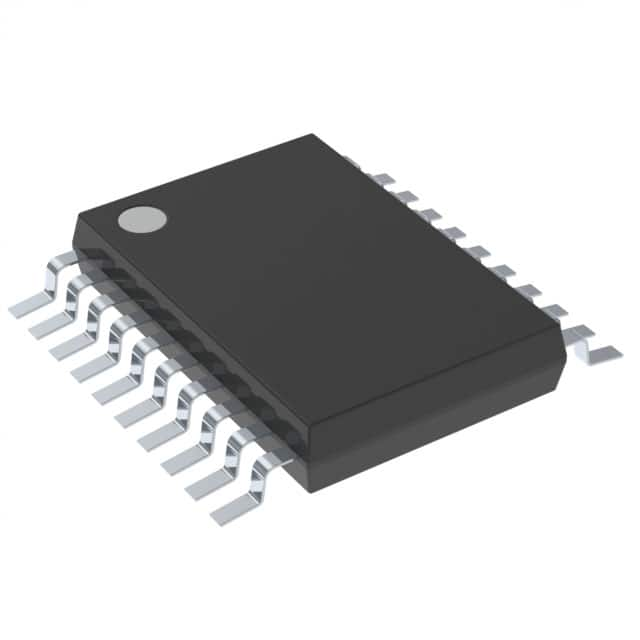
The device is housed in a 20-SOIC package, designed for surface mounting. It offers TTL-compatible CMOS inputs and push-pull outputs. The latch-up performance exceeds 250mA per JESD 17, indicating robust performance under stress conditions. Its design aims to improve both performance and density in 3-state memory-address drivers, clock drivers, and bus-oriented receivers and transmitters.
Key electrical characteristics include an output current of 8mA and a typical propagation delay between 5ns and 10ns. The SN74AHCT244NSR is part of the AHCT technology family, known for its balance of speed and power consumption. This buffer/driver is well-suited for various applications including network switches, power infrastructures, PCs, notebooks, and test and measurement equipment.
| Qty | Low | High |
|---|---|---|
| 1+ | $0.29 | $0.29 |
Estimated market price range - modelled values for guidance only, not live distributor offers.
4.5V to 5.5V.
20-SOIC (0.209", 5.30mm Width) surface mount package.
-40°C to 125°C.
Buffer, Non-Inverting.
3-State.
5-10ns typical.
8mA per channel (sink and source).