

| Distributor | Stock | Pricing | MOQ | PKG | Lead Time | Date Code | On Order Quantity | On Order Delivery | |
|---|---|---|---|---|---|---|---|---|---|
|
90,400 pcs
|
90400 pcs | On Request | 1 | On Request | On Request | On Request | On Request | On Request | |
|
13 pcs
|
13 pcs | On Request | 1 | On Request | On Request | 0019 | On Request | On Request |
| Category | |
| Manufacturer Name | |
| Current | |
| Input Type | |
| Latch-up Performance | |
| Logic Type | |
| Mounting Type | |
| Number of Bits per Element | |
| Number of Elements | |
| Operating Temperature | |
| Output Type | |
| Supplier Device Package | |
| Supplier Package | |
| Supply Current | |
| Voltage |
The SN74AHCT244DW from Texas Instruments is an octal buffer/driver designed for 3-state memory-address drivers, clock drivers, and bus-oriented receivers and transmitters. This device features TTL-compatible CMOS inputs and operates within a voltage range of 4.5V to 5.5V.
Key electrical characteristics include an output current of 8mA for both IOL and IOH, and a low supply current of 40µA. The operating temperature range is -40°C to 125°C, making it suitable for demanding environments. The buffer offers very high speed with a typical propagation delay (tpd) between 5-10ns.
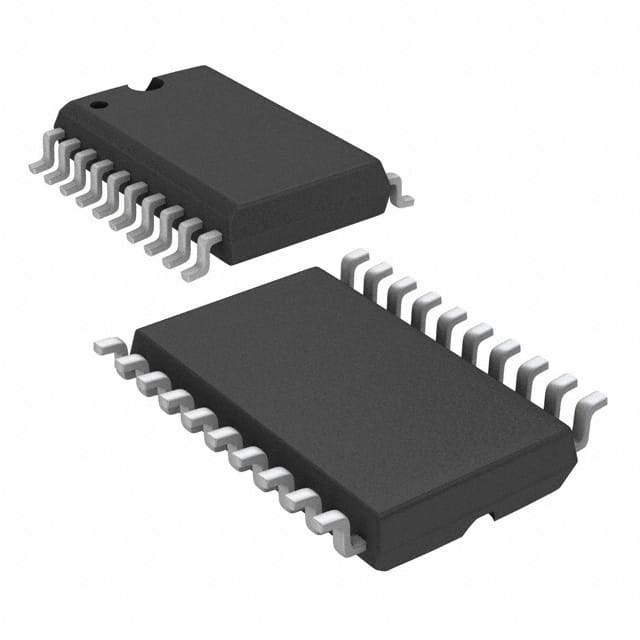
This component is housed in a 20-SOIC package with surface mount mounting type. The body dimensions are 12.8mm x 7.5mm, and the package size is 12.80mm x 10.3mm. Its latch-up performance exceeds 250mA per JESD 17.
Applications for the SN74AHCT244 include network switches, power infrastructures, PCs and notebooks, wearable health and fitness devices, and tests and measurements.
| Qty | Low | High |
|---|---|---|
| 1+ | $0.62 | $0.62 |
Estimated market price range - modelled values for guidance only, not live distributor offers.
The SN74AHCT244DW operates from 4.5V to 5.5V.
The operating temperature range is -40°C to 125°C.
The SN74AHCT244DW is offered in a 20-SOIC surface-mount package.
The outputs are 3-state, non-inverting buffers.
The typical propagation delay is 5 to 10 nanoseconds.