

| Distributor | Stock | Pricing | MOQ | PKG | Lead Time | Date Code | On Order Quantity | On Order Delivery | |
|---|---|---|---|---|---|---|---|---|---|
|
7,792 pcs
|
7792 pcs | On Request | 1 | On Request | On Request | 11+ | On Request | On Request |
| Category | |
| Manufacturer Name | |
| Capacitance | |
| Current | |
| Data Rate (Max) | |
| Delay Time | |
| ESD Protection | |
| Input | |
| Input Signal | |
| Lead Spacing | |
| Mounting Type | |
| Number of Channels | |
| Operating Temperature | |
| Output | |
| Output Signal | |
| Power Dissipation | |
| Supplier Device Package | |
| Supplier Package | |
| Type | |
| Voltage |
The SN65LVDS22PWR from Texas Instruments is a dual multiplexed LVDS repeater, offering a flexible solution for signal routing and splitting applications. It utilizes low-voltage differential signaling (LVDS) to achieve high signaling rates of up to 400 Mbps.
This device operates from a wide voltage range of 3V to 3.6V, with a typical current consumption of 13mA. The repeater features a propagation delay of 4.0ns, making it suitable for high-speed data transfer. It meets or exceeds the requirements of the ANSI TIA/EIA-644-1995 standard.
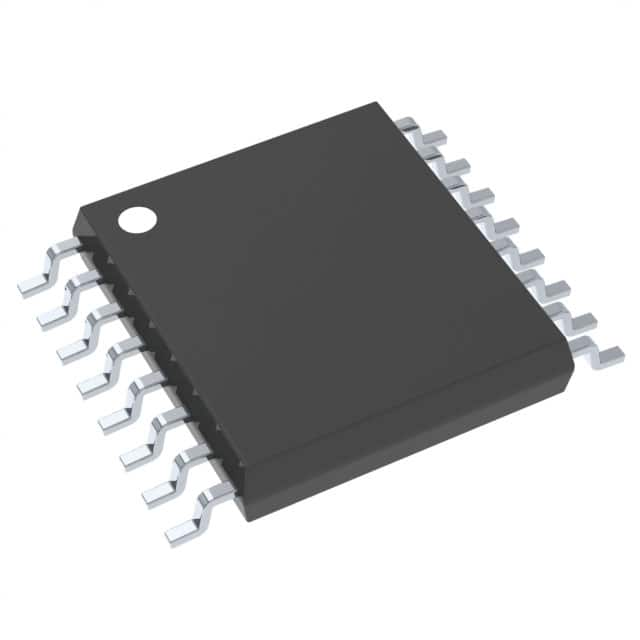
The SN65LVDS22PWR is available in a 16-TSSOP surface mount package. It is designed for an operating temperature range of -40°C to 85°C, ensuring reliable performance in various environmental conditions. The device also includes ESD protection exceeding 12 kV on bus pins and offers 5V tolerant LVTTL levels.
Key electrical characteristics include a maximum data rate of 250 Mbps and a power dissipation of 150 mW at 400 Mbps. The multiplexer control signals allow for flexible signal routing, enabling splitter or signal routing functions with a single device.
| Qty | Low | High |
|---|---|---|
| 1+ | $3.72 | $3.72 |
Estimated market price range - modelled values for guidance only, not live distributor offers.
The maximum signaling rate is 400 Mbps.
The operating voltage range is 3V to 3.6V.
The operating temperature range is -40°C to 85°C.
It is available in a 16-TSSOP package.
The propagation delay is 4.0ns.
Yes, it meets or exceeds the requirements of the ANSI TIA/EIA-644-1995 standard.