

| Distributor | Stock | Pricing | MOQ | PKG | Lead Time | Date Code | On Order Quantity | On Order Delivery | |
|---|---|---|---|---|---|---|---|---|---|
|
108 pcs
|
108 pcs | On Request | 1 | On Request | On Request | N/A | On Request | On Request |
| Category | |
| Manufacturer Name | |
| Capacitance | |
| Current | |
| Data Rate (Max) | |
| Delay Time | |
| ESD Protection | |
| Input | |
| Mounting Type | |
| Number of Channels | |
| Operating Temperature | |
| Output | |
| Supplier Device Package | |
| Supplier Package | |
| Type | |
| Voltage |
The SN65LVDS1050PW is a dual LVDS transceiver from Texas Instruments, suitable for applications requiring high-speed differential signaling. It operates from a single 2.4-V to 3.6-V supply and achieves signaling rates as high as 400 Mbps.
Key electrical characteristics include a typical driver propagation delay of 1.7 ns and a receiver propagation delay of 3.7 ns. The device offers low power dissipation, with the driver consuming approximately 25 mW and the receiver consuming 60 mW at 200 MHz. It supports both LVDS and LVTTL input and output signals.
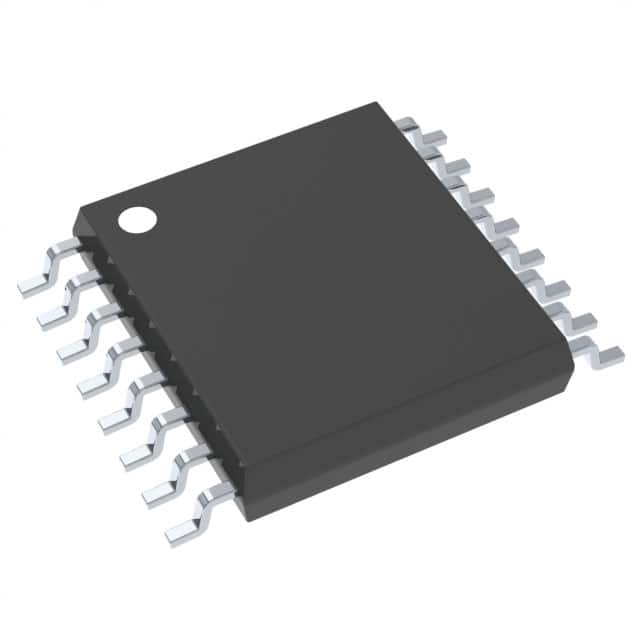
Packaged in a 16-TSSOP, the SN65LVDS1050PW is designed for surface mount applications. Its operating temperature range is -40°C to 85°C, making it suitable for a variety of environmental conditions. The transceiver meets or exceeds the ANSI TIA/EIA-644-1995 standard and features ESD protection exceeding 12 kV.
This component is ideal for portable, battery-powered applications due to its lower supply voltage range and compact packaging. It is similar to the SN65LVDS050 but optimized for lower voltage operation.
| Qty | Low | High |
|---|---|---|
| 1+ | $2.76 | $2.76 |
Estimated market price range - modelled values for guidance only, not live distributor offers.
The maximum signaling rate for the SN65LVDS1050PW is 400 Mbps.
The SN65LVDS1050PW operates from a voltage range of 2.4V to 3.6V.
The operating temperature range is -40°C to 85°C.
The SN65LVDS1050PW is available in a 16-TSSOP package.
The typical driver propagation delay is 1.7 ns, and the typical receiver propagation delay is 3.7 ns.