

| Distributor | Stock | Pricing | MOQ | PKG | Lead Time | Date Code | On Order Quantity | On Order Delivery | |
|---|---|---|---|---|---|---|---|---|---|
|
22,600 pcs
|
22600 pcs | On Request | 1 | On Request | On Request | On Request | On Request | On Request | |
|
94 pcs
|
94 pcs | On Request | 1 | On Request | On Request | On Request | On Request | On Request |
| Category | |
| Manufacturer Name | |
| AEC Qualified | |
| Automotive Grade | |
| Data Rate | |
| Duplex | |
| Industrial Grade | |
| Lead Spacing | |
| Medical Grade | |
| Military Grade | |
| Mounting Type | |
| Number of Drivers | |
| Operating Temperature | |
| Operating Voltage | |
| Protocol | |
| Supplier Device Package | |
| Supplier Package | |
| Tape & Reel | |
| Type | |
| Voltage |
The SN65LVDS050D from Texas Instruments is a dual LVDS transceiver featuring low-voltage differential signaling for high-speed communication. It supports signaling rates up to 400 Mbps, making it suitable for demanding applications.
This transceiver operates from a single 3.3V supply and offers LVTTL input levels that are 5V tolerant. It provides a driver propagation delay of 1.7 ns and a receiver propagation delay of 3.7 ns. The device also features robust ESD protection, exceeding 2000V per MIL-STD-883 and 12kV on bus terminals.
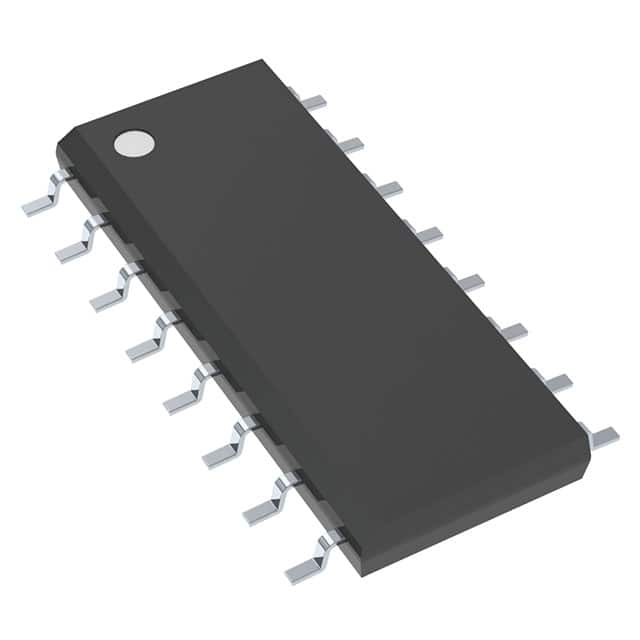
Packaged in a 16-SOIC surface-mount form factor, the SN65LVDS050D is designed for efficient integration into electronic systems. Its operating temperature range is -40°C to 85°C, ensuring reliable performance in various environments. The transceiver meets or exceeds the requirements of the ANSI TIA/EIA-644-1995 standard.
| Qty | Low | High |
|---|---|---|
| 1+ | $2.39 | $2.39 |
Estimated market price range - modelled values for guidance only, not live distributor offers.
The SN65LVDS050D operates from a 3V to 3.6V supply.
The SN65LVDS050D is available in a 16-SOIC package.
The SN65LVDS050D has an operating temperature range of -40°C to 85°C.
The SN65LVDS050D supports signaling rates up to 400 Mbps.
Yes, the SN65LVDS050D meets or exceeds the requirements of the ANSI TIA/EIA-644-1995 standard.