

| Distributor | Stock | Pricing | MOQ | PKG | Lead Time | Date Code | On Order Quantity | On Order Delivery | |
|---|---|---|---|---|---|---|---|---|---|
|
45,200 pcs
|
45200 pcs | On Request | 1 | On Request | On Request | On Request | On Request | On Request | |
|
2,500 pcs
|
2500 pcs | On Request | 1 | On Request | On Request | 22+ | On Request | On Request | |
|
1,831 pcs
|
1831 pcs | On Request | 1 | On Request | On Request | 1723+ | On Request | On Request | |
|
400 pcs
|
400 pcs | On Request | 1 | On Request | On Request | On Request | On Request | On Request |
| Category | |
| Manufacturer Name | |
| Channel Type | |
| Channels per Circuit | |
| Input Signal | |
| Mounting Type | |
| Number of Circuits | |
| Operating Temperature | |
| Output Signal | |
| Output Type | |
| Propagation Delay | |
| Supplier Device Package | |
| Translator Type |
The SN65EPT22DGKR from Texas Instruments is a low-power, dual LVTTL/LVCMOS to differential LVPECL buffer. This device is designed for data and clock transmission over backplanes and signaling level conversion applications.
It operates with an LVPECL VCC range of 3.0 V to 3.6 V and supports clock frequencies up to 2.0 GHz typically. The typical propagation delay is 420 ps. The device includes circuitry to maintain a known logic HIGH level when inputs are open, and features built-in temperature compensation.
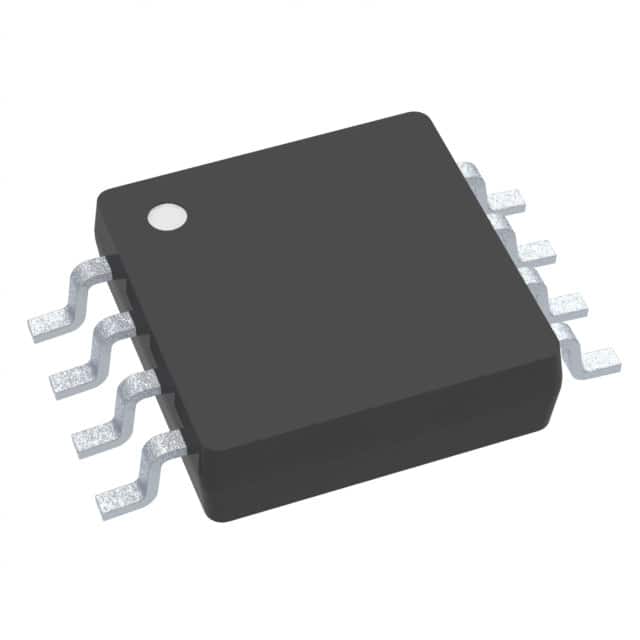
The SN65EPT22DGKR is housed in an 8-VSSOP surface mount package. It operates within a temperature range of -40°C to 85°C. The standard package quantity is 2,500 units on tape and reel.
| Qty | Low | High |
|---|---|---|
| 1+ | $1.43 | $1.43 |
Estimated market price range - modelled values for guidance only, not live distributor offers.
The LVPECL supply voltage range is 3.0V to 3.6V.
The device is available in an 8-VSSOP surface mount package.
The operating temperature range is -40°C to 85°C.
The device supports clock frequencies up to 2 GHz typical.
Typical propagation delay is 420 ps.
It converts LVCMOS/LVTTL input signals to differential LVPECL output signals.
It has 2 unidirectional channels in a single circuit.