

| Distributor | Stock | Pricing | MOQ | PKG | Lead Time | Date Code | On Order Quantity | On Order Delivery | |
|---|---|---|---|---|---|---|---|---|---|
|
1,319 pcs
|
1319 pcs | On Request | 1 | On Request | On Request | On Request | On Request | On Request | |
|
980 pcs
|
980 pcs | On Request | 1 | On Request | On Request | 20+ | On Request | On Request |
| Category | |
| Manufacturer Name | |
| Data Rate | |
| Duplex | |
| Lead Spacing | |
| Mounting Type | |
| Number of Drivers | |
| Operating Temperature | |
| Protocol | |
| Receiver Hysteresis | |
| Supplier Device Package | |
| Supplier Package | |
| Supply Current | |
| Type | |
| Voltage |
The SN65C3232DR from Texas Instruments is a versatile RS-232 compatible line driver and receiver designed for various interface applications. It operates with a single 3V to 5.5V supply, making it suitable for a wide range of systems.
Key electrical specifications include a data rate of up to 1Mbps and ±15kV ESD protection on bus pins, ensuring robust performance in demanding environments. The device features two line drivers and two line receivers, providing full duplex communication. It also accepts 5V logic input with a 3.3V supply and has a low supply current of 300 μA typical.
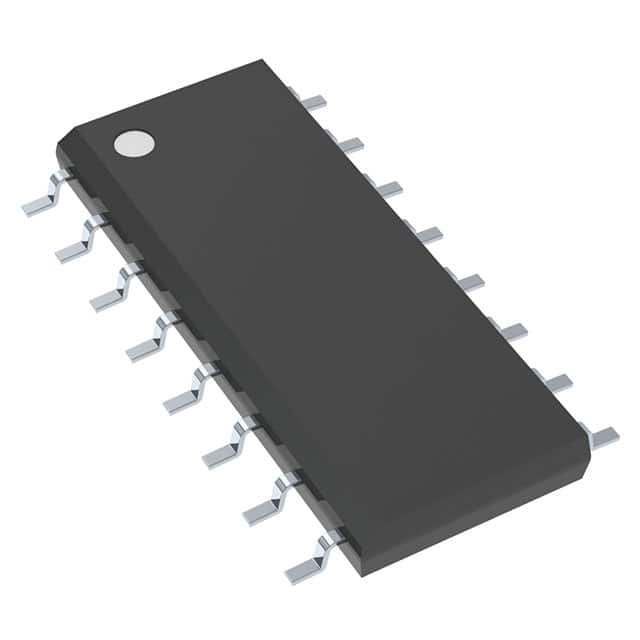
This transceiver is available in a 16-SOIC package, suitable for surface mounting. Its operating temperature range is -40°C to 85°C, making it appropriate for industrial PCs, wired networking, data centers, and battery-powered devices.
Applications include industrial PCs, wired networking, data center and enterprise computing, battery-powered systems, notebooks, laptops, palmtop PCs, and hand-held equipment.
| Qty | Low | High |
|---|---|---|
| 1+ | $1.44 | $1.44 |
Estimated market price range - modelled values for guidance only, not live distributor offers.
The SN65C3232DR operates with a supply voltage range of 3V to 5.5V.
This transceiver supports data rates up to 1Mbps.
The operating temperature range is -40°C to 85°C.
The SN65C3232DR is supplied in a 16-SOIC package.
Yes, the RS-232 bus pins have ESD protection exceeding ±15 kV using the human-body model (HBM).