
BC847BS.115
NXP Semiconductors
The BC847BS.115 is a bipolar transistor array from NXP Semiconductors. It features RoHS3 compliance and an MSL of 1 Unlimited.


| Distributor | Stock | Pricing | MOQ | PKG | Lead Time | Date Code | On Order Quantity | On Order Delivery | |
|---|---|---|---|---|---|---|---|---|---|
|
264 pcs
|
264 pcs | On Request | 1 | On Request | On Request | On Request | On Request | On Request |
| Category | |
| Manufacturer Name | |
| AEC Qualified | |
| Automotive Grade | |
| Industrial Grade | |
| Medical Grade | |
| Military Grade |
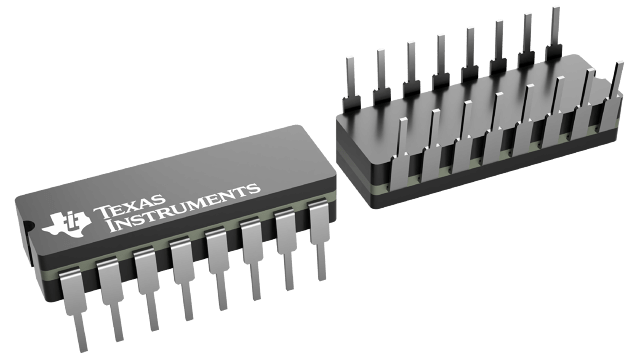
The SN54HC109J is a dual J-K positive-edge-triggered flip-flop manufactured by Texas Instruments. This component belongs to the HC technology family and utilizes CMOS input type with a push-pull output type. It supports a clock frequency of up to 20 MHz and operates within a wide voltage range of 2 V to 6 V.
Key electrical characteristics include a maximum supply current of 80 µA, an IOL of -4 mA, and an IOH of 4 mA. The device features balanced outputs, clear and preset functions, positive input clamp diodes, and is high speed with a typical propagation delay of 12 ns. It can drive up to 10 LSTTL loads and has a low input current of 1 µA max.
The operating temperature range for the SN54HC109J is -55°C to 125°C, and it is rated for military applications. Available package options include CDIP (J), LCCC (FK), and CFP (W). This flip-flop is suitable for various digital logic applications requiring reliable state storage and clocking.
This device is designed for applications requiring precise timing and state control. Its robust design and wide operating temperature range make it suitable for demanding environments. The dual flip-flop configuration allows for efficient implementation of sequential logic circuits.
| Qty | Low | High |
|---|---|---|
| 1+ | $5.68 | $5.68 |
Estimated market price range - modelled values for guidance only, not live distributor offers.
The SN54HC109J operates within a wide voltage range of 2 V to 6 V.
The maximum clock frequency for the SN54HC109J is 20 MHz.
The SN54HC109J has an operating temperature range of -55°C to 125°C.
Key features include balanced outputs, clear and preset functions, positive edge triggering, and a typical propagation delay of 12 ns.