

| Distributor | Stock | Pricing | MOQ | PKG | Lead Time | Date Code | On Order Quantity | On Order Delivery | |
|---|---|---|---|---|---|---|---|---|---|
|
24,420 pcs
|
24420 pcs | On Request | 1 | On Request | On Request | On Request | On Request | On Request | |
|
1,800 pcs
|
1800 pcs | On Request | 1 | On Request | On Request | 2208 | On Request | On Request | |
|
365 pcs
|
365 pcs | On Request | 1 | On Request | On Request | 1008+ | On Request | On Request |
| Category | |
| Manufacturer Name | |
| Applications | |
| Current | |
| Mounting Type | |
| Operating Temperature | |
| Peak Forward Surge Current | |
| Power | |
| Power Dissipation | |
| Power Line Protection | |
| Supplier Device Package | |
| Type | |
| Unidirectional Channels | |
| Voltage |
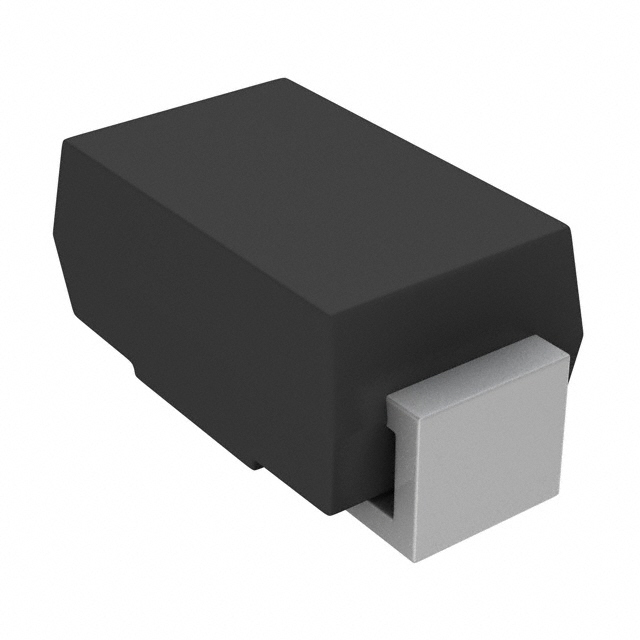
The Vishay Dale SMAJ26A-E3/61 is a surface-mount TVS Diode designed for protecting sensitive electronics from voltage transients. It features a 400W peak pulse power capability with a 10/1000 μs waveform and a 3.3W power dissipation on an infinite heatsink.
This device has a working voltage range of 5.0V to 188V and a breakdown voltage range of 6.40V to 231V. The clamping voltage is 42.1V at 9.5A. It is suitable for general-purpose applications and operates in temperatures from -55°C to 150°C.
The TVS Diode comes in a DO-214AC (SMA) package, making it ideal for automated placement. It is available in unidirectional and bidirectional configurations. The component is designed for fast response times and excellent clamping capability, providing robust protection against inductive load switching and lighting.
This part is suitable for use in consumer, computer, industrial, automotive, and telecommunication applications requiring sensitive electronics protection.
| Qty | Low | High |
|---|---|---|
| 1+ | $0.55 | $0.55 |
Estimated market price range - modelled values for guidance only, not live distributor offers.
The standoff voltage is 26V.
The maximum clamping voltage is 42.1V.
Surface mount DO-214AC (SMA) package.
400W under a 10/1000μs waveform.
-55°C to 150°C (junction temperature).
Unidirectional and bidirectional.