

| Distributor | Stock | Pricing | MOQ | PKG | Lead Time | Date Code | On Order Quantity | On Order Delivery | |
|---|---|---|---|---|---|---|---|---|---|
|
20,000 pcs
|
20000 pcs | On Request | 1 | On Request | On Request | On Request | On Request | On Request |
| Category | |
| Manufacturer Name | |
| Channel Type | |
| Common Mode Transient Immunity (Min) | |
| Data Rate | |
| Inputs | |
| Isolated Power | |
| Lead Spacing | |
| Mounting Type | |
| Number of Channels | |
| Operating Temperature | |
| Propagation Delay | |
| Propagation Delay tpLH | |
| Pulse Width Distortion (Max) | |
| Rise | |
| Supplier Device Package | |
| Tape & Reel | |
| Technology | |
| Type | |
| Voltage |
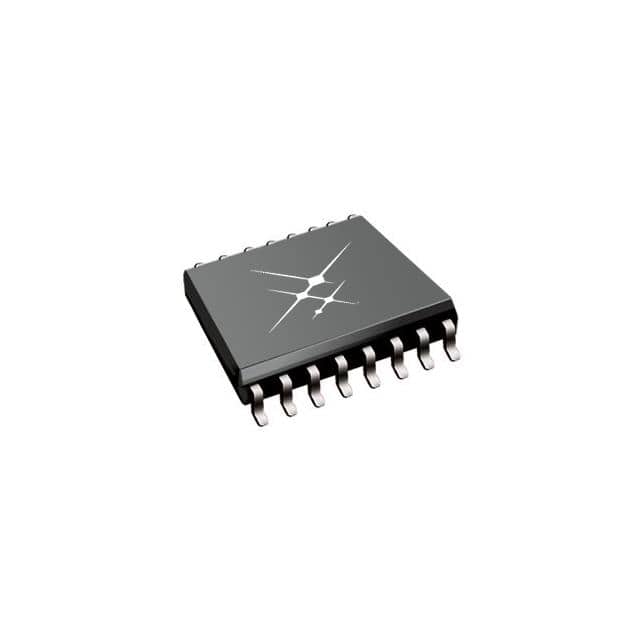
The Skyworks SI8662BD-AS is a six-channel digital isolator from the Si86xx family, built using advanced CMOS technology for superior performance and low power consumption. It supports data rates up to 150 Mbps with propagation delays under 10 ns, making it suitable for high-speed applications.
This isolator features 5000Vrms isolation and a wide operating supply voltage range of 2.5V to 5.5V. It includes Schmitt trigger inputs for high noise immunity and a selectable fail-safe mode for controlling the default output state during power loss. The device is available in a 16-SOIC package for surface mounting.
Key electrical characteristics include a common mode transient immunity of 35kV/µs and precise timing specifications. The device is designed for reliability and stable operation across wide temperature ranges, from -40°C to 125°C. Automotive-grade options are also available for specific part numbers, ensuring robustness for automotive applications.
| Qty | Low | High |
|---|---|---|
| 1+ | $3.51 | $3.51 |
Estimated market price range - modelled values for guidance only, not live distributor offers.
The SI8662BD-AS supports data rates up to 150 Mbps.
The SI8662BD-AS provides 5000Vrms isolation.
The operating temperature range is -40°C to 125°C.
The SI8662BD-AS is available in a 16-SOIC package.
The SI8662BD-AS has 6 channels.
The propagation delay is less than 10 ns.