

| Distributor | Stock | Pricing | MOQ | PKG | Lead Time | Date Code | On Order Quantity | On Order Delivery | |
|---|---|---|---|---|---|---|---|---|---|
|
5 pcs
|
5 pcs | On Request | 1 | On Request | On Request | On Request | On Request | On Request |
| Category | |
| Manufacturer Name | |
| Applications | |
| Interface | |
| Lead Spacing | |
| Mounting Type | |
| Operating Temperature | |
| Supplier Device Package | |
| Supplier Package | |
| Voltage |
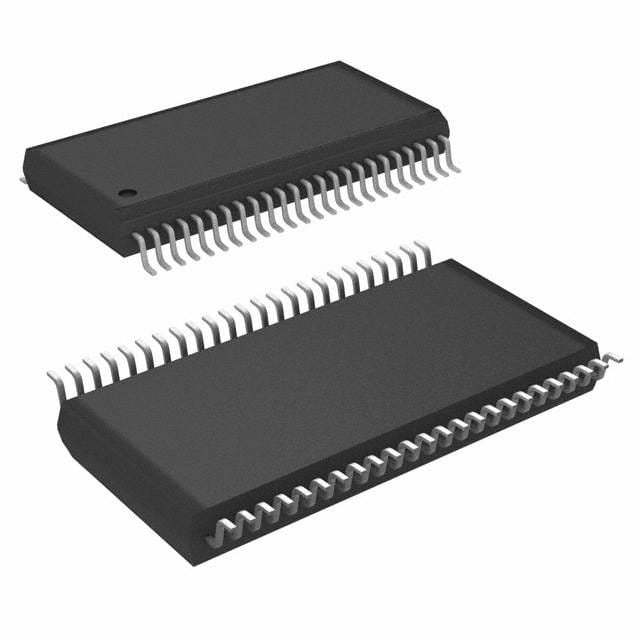
The Texas Instruments SCANSTA111MT/NOPB is an active interface IC categorized under specialized interface solutions. It is designed to support IEEE 1149.1 (JTAG) protocols, making it suitable for testing equipment applications.
This device operates with a supply voltage ranging from 3.0V to 3.6V. It is available in a 48-TSSOP package, designed for surface mount applications. The package dimensions are specified as 48-TFSOP (0.240", 6.10mm Width).
The SCANSTA111MT/NOPB supports hierarchical and multidrop addressable capability with 7 slot inputs that can accommodate up to 121 unique addresses, an interrogation address, a broadcast address, and 4 multi-cast group addresses. It features 3 IEEE 1149.1-compatible configurable local scan ports and a transparent mode for buffering backplane IEEE 1149.1 pins to a single local scan port. Additional features include LSP ACTIVE outputs for analog busses supporting IEEE 1149.4 and general-purpose local port pass-through bits useful for FPGA programming or device status monitoring. It also includes a known power-up state for TRST on all local scan ports, a 32-bit TCK counter, and a 16-bit LFSR signature compactor. Local TAPs can become TRI-STATE via the OE input, allowing an alternate test master to take control.
| Qty | Low | High |
|---|---|---|
| 1+ | $7.43 | $7.43 |
Estimated market price range - modelled values for guidance only, not live distributor offers.
The operating voltage range is 3.0 V to 3.6 V.
The SCANSTA111MT/NOPB is supplied in a 48-TSSOP package.
The operating temperature range is -40°C to 85°C.
It supports the IEEE 1149.1 (JTAG) interface protocol.
Its primary applications include testing equipment.