

| Distributor | Stock | Pricing | MOQ | PKG | Lead Time | Date Code | On Order Quantity | On Order Delivery | |
|---|---|---|---|---|---|---|---|---|---|
|
1,000 pcs
|
1000 pcs | On Request | 1 | On Request | On Request | 0406+ | On Request | On Request |
| Category | |
| Manufacturer Name | |
| Circuit | |
| Data Rate | |
| Independent Circuits | |
| Mounting Type | |
| Operating Temperature | |
| Package Quantity | |
| Power Consumption | |
| Supplier Device Package | |
| Supplier Package | |
| Type | |
| Voltage | |
| Voltage Supply Source |
The SCAN90CP02SP from Texas Instruments is a high-speed 1.5 Gbps 2x2 LVDS crosspoint switch designed for demanding applications. It features configurable pre-emphasis levels (0/25/50/100%) to overcome signal degradation over lossy backplanes and cables.
This device supports a wide range of input interfaces including LVDS, BLVDS, CML, and LVPECL, with LVDS outputs. It operates from a single 3.3V supply and consumes low power, drawing only 70 mA in dual repeater mode at 1.5 Gbps. The non-blocking architecture allows for flexible configurations such as 1:2 splitters, 2:1 multiplexers, crossovers, and dual buffers.
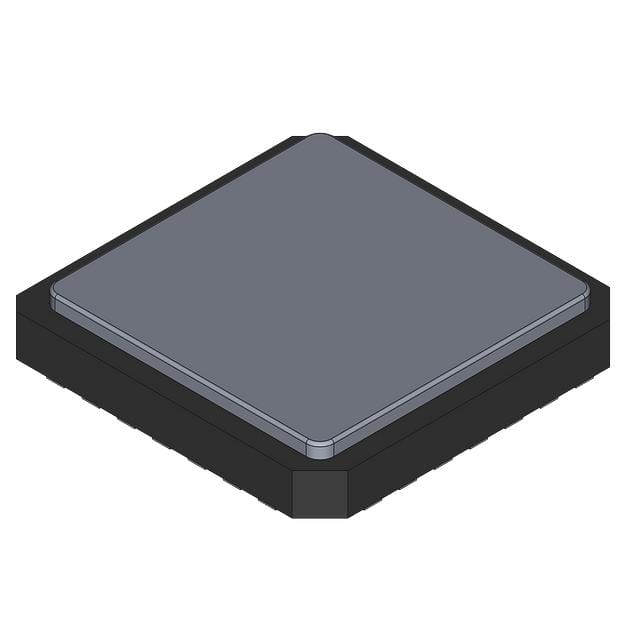
Designed for industrial environments, the SCAN90CP02SP operates reliably within a temperature range of -40°C to 85°C. It is available in a 28-lead UQFN package, suitable for surface mounting. The integrated IEEE 1149.1 and 1149.6 circuitry enhances testability for both single-ended and differential PCB interconnects.
| Qty | Low | High |
|---|---|---|
| 1+ | $1.27 | $1.27 |
Estimated market price range - modelled values for guidance only, not live distributor offers.
The SCAN90CP02SP operates from a single 3.3V supply.
The operating temperature range is -40°C to 85°C.
The SCAN90CP02SP is available in a 28-UQFN (5x5) surface-mount package.
The SCAN90CP02SP supports data rates up to 1.5 Gbps per channel.
The SCAN90CP02SP supports LVDS, BLVDS, CML, and LVPECL input interfaces.
Typical power consumption is 70 mA in dual repeater mode at 1.5 Gbps.
Yes, the SCAN90CP02SP is compliant with IEEE 1149.1 and 1149.6 test standards.