

| Distributor | Stock | Pricing | MOQ | PKG | Lead Time | Date Code | On Order Quantity | On Order Delivery | |
|---|---|---|---|---|---|---|---|---|---|
|
43 pcs
|
43 pcs | On Request | 1 | On Request | On Request | On Request | On Request | On Request |
| Category | |
| Manufacturer Name | |
| Applications | |
| Capacitance | |
| Capacitance Range | |
| Dissipation Factor | |
| Insulation Resistance | |
| Lead Spacing | |
| Mounting Type | |
| Operating Temperature | |
| Rated Voltage | |
| Temperature Characteristics | |
| Temperature Coefficient | |
| Tolerance | |
| Voltage |
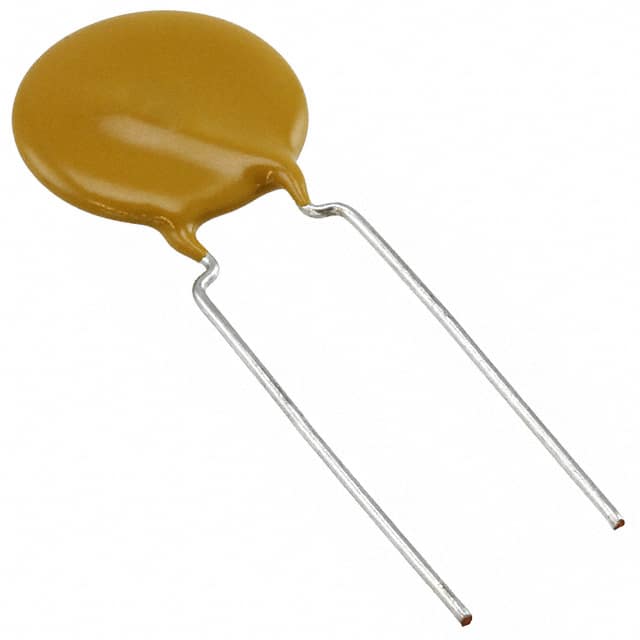
The Vishay Dale S332M33Z5UN6UJ5R is a ceramic capacitor designed for general-purpose applications. It offers a capacitance of 3300 pF with a tolerance of ±20% and a rated voltage of 1000V (1kV).
This capacitor utilizes a Z5U temperature characteristic, indicating its performance across a temperature range of -30°C to +125°C. The component is designed for through-hole mounting and comes in a radial, disc package.
Key electrical specifications include a minimum insulation resistance of 10 GΩ at rated voltage and a dissipation factor of 2.5% maximum at 1 kHz, 1 V for Class 2 dielectrics. The test voltage is 200% of the rated voltage. The datasheet indicates a capacitance range of 10 pF to 33 nF for the S Series, with rated voltages available up to 6000 VDC. The climatic category for Class 3 is 30/85/21.
| Qty | Low | High |
|---|---|---|
| 1+ | $0.10 | $0.10 |
Estimated market price range - modelled values for guidance only, not live distributor offers.
The capacitance of the S332M33Z5UN6UJ5R capacitor is 3300 pF.
The voltage rating for the S332M33Z5UN6UJ5R capacitor is 1000V (1kV).
The tolerance of the S332M33Z5UN6UJ5R capacitor is ±20%.
The temperature coefficient for the S332M33Z5UN6UJ5R capacitor is Z5U.
The operating temperature range of the S332M33Z5UN6UJ5R capacitor is -30°C to +125°C.
The S332M33Z5UN6UJ5R capacitor uses through-hole mounting.
The S332M33Z5UN6UJ5R capacitor is suitable for general purpose applications, including temperature compensation, coupling and decoupling, and bypassing.