

| Distributor | Stock | Pricing | MOQ | PKG | Lead Time | Date Code | On Order Quantity | On Order Delivery | |
|---|---|---|---|---|---|---|---|---|---|
|
6,500 pcs
|
6500 pcs | On Request | 1 | On Request | On Request | On Request | On Request | On Request | |
|
3,123 pcs
|
3123 pcs | On Request | 1 | On Request | On Request | 21+ | On Request | On Request |
| Category | |
| Manufacturer Name | |
| AEC Qualified | |
| Automotive Grade | |
| Connectivity | |
| Core Processor | |
| Core Size | |
| Data Converters | |
| EEPROM Size | |
| Industrial Grade | |
| Medical Grade | |
| Military Grade | |
| Mounting Type | |
| Number of I | |
| Operating Temperature | |
| Oscillator Type | |
| Peripherals | |
| Program Memory Size | |
| Program Memory Type | |
| RAM Size | |
| Speed | |
| Supplier Device Package | |
| Voltage |
The Renesas R5F100ACASP#30 is a 16-bit microcontroller belonging to the RL78/G13 series. It offers 32KB of FLASH program memory and 2KB of RAM, along with 4KB of EEPROM. This device operates over a wide voltage range of 1.6V to 5.5V and can achieve a clock speed of up to 32MHz.
Key peripherals include DMA, LVD, POR, PWM, and WDT, along with connectivity options such as CSI, I²C, LINbus, and UART/USART. The microcontroller features an internal oscillator and an 8-channel, 8/10-bit A/D converter.
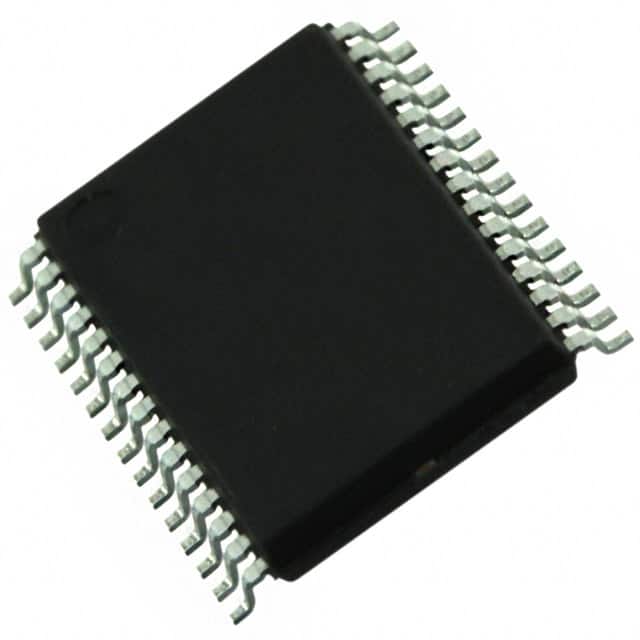
Packaged in a 30-LSSOP (0.240", 6.10mm Width) format, the R5F100ACASP#30 is designed for surface mounting. It operates within an ambient temperature range of -40°C to 85°C. This component is suitable for various embedded applications requiring a compact and versatile microcontroller.
| Qty | Low | High |
|---|---|---|
| 1+ | $6.40 | $6.40 |
Estimated market price range - modelled values for guidance only, not live distributor offers.
The operating voltage range is 1.6V to 5.5V.
It uses a 30-LSSOP package.
The operating temperature range is -40°C to 85°C (TA).
Common challenges include managing limited memory resources, potential memory overflows, stack overflows, and inefficient memory allocation. Issues can also arise when working with specific peripheral modules like timers or communication interfaces.