

| Distributor | Stock | Pricing | MOQ | PKG | Lead Time | Date Code | On Order Quantity | On Order Delivery | |
|---|---|---|---|---|---|---|---|---|---|
|
13,908 pcs
|
13908 pcs | On Request | 1 | On Request | On Request | On Request | On Request | On Request |
| Category | |
| Manufacturer Name | |
| Approval Agency | |
| Current | |
| Frequency | |
| Gain | |
| Mounting Type | |
| Noise Figure | |
| Output Power | |
| P1dB | |
| RF Type | |
| Storage Temperature | |
| Supplier Device Package | |
| Tape & Reel | |
| Test Frequency | |
| Voltage |
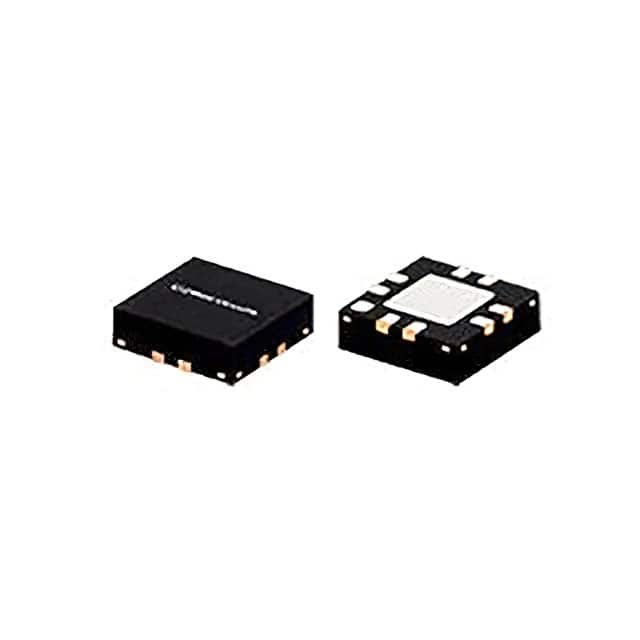
The Mini-Circuits PMA-5452+ is an E-PHEMT based monolithic microwave integrated circuit (MMIC) amplifier. It operates across a broad frequency range from 50 MHz to 6 GHz, making it suitable for various wireless communication bands including Cellular, ISM, GSM, WCDMA, LTE, WiMAX, and WLAN.
This amplifier is characterized by its ultra-low noise figure of 0.6 dB (typical at 0.5 GHz) and a high IP3 of 32 dBm (typical at 1 GHz). It delivers a typical gain of 19 dB at 1 GHz and an output power of up to +18.5 dBm. The device operates on a single 3V supply with a low current consumption of 40 mA, making it ideal for power-sensitive applications.
The PMA-5452+ is internally matched to 50 Ohms, eliminating the need for external matching components. It features a ruggedized design capable of handling input powers up to +20 dBm without an external limiter. The amplifier is housed in a compact 8-QFN (3x3 mm) package with an exposed pad for improved thermal management.
Applications for the PMA-5452+ include sensitive receiver front-ends (RFE) in cellular infrastructure, wireless local area networks, and other communication systems where both high sensitivity and good linearity are required.
| Qty | Low | High |
|---|---|---|
| 1+ | $0.98 | $0.98 |
Estimated market price range - modelled values for guidance only, not live distributor offers.
The PMA-5452+ operates at 3 V.
The PMA-5452+ uses an 8-VQFN exposed pad package.
The frequency range is 0.05 GHz to 6 GHz.
The typical gain at 1 GHz is 19 dB.
The noise figure at 0.5 GHz is 0.6 dB.