

| Distributor | Stock | Pricing | MOQ | PKG | Lead Time | Date Code | On Order Quantity | On Order Delivery | |
|---|---|---|---|---|---|---|---|---|---|
|
52,000 pcs
|
52000 pcs | On Request | 1 | On Request | On Request | 1642+ | On Request | On Request | |
|
7,100 pcs
|
7100 pcs | On Request | 1 | On Request | On Request | 1642+ | On Request | On Request |
| Category | |
| Manufacturer Name | |
| Diameter | |
| Driver Circuitry | |
| Frequency | |
| Height | |
| Input Type | |
| Mounting Type | |
| Operating Mode | |
| Operating Temperature | |
| Port Location | |
| Sound Pressure Level (SPL) | |
| Technology | |
| Termination | |
| Voltage | |
| Voltage Range |
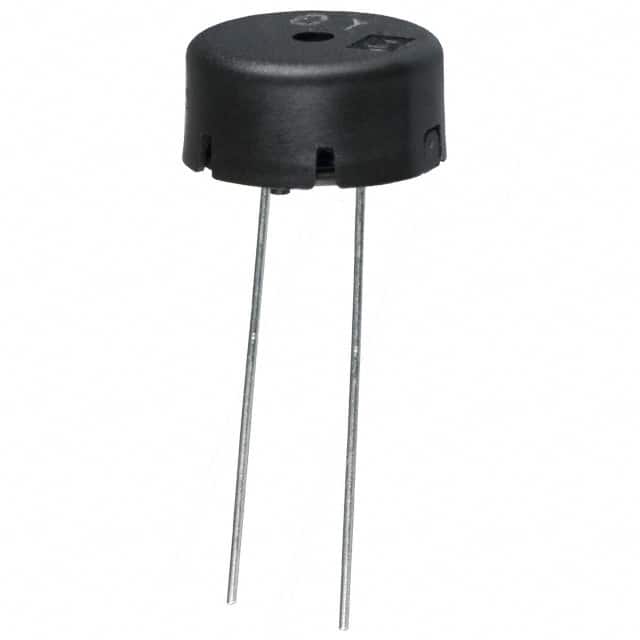
The Murata PKM13EPYH4000-A0 is a piezo buzzer belonging to the PK series, designed for audio indication and alert functions. This component operates with a rated voltage of 1.5V and a maximum supply voltage of 30V, emitting a sound at a frequency of 4kHz.
It provides a sound pressure level of 70dB at a distance of 10cm when driven at 1.5V. The buzzer utilizes a transducer, externally driven circuitry and accepts a zero-peak signal input type. Its operating temperature range is from -40°C to 85°C, making it suitable for various environmental conditions.
Mechanically, the PKM13EPYH4000-A0 features a through-hole mounting type for secure integration into PCBs. It has a diameter of 12.60mm and a height of 7.40mm. The termination style is PC Pins, facilitating easy soldering. This component is classified under Alarms, Buzzers, and Sirens and is suitable for applications requiring audible alerts.
| Qty | Low | High |
|---|---|---|
| 1+ | $0.99 | $0.99 |
Estimated market price range - modelled values for guidance only, not live distributor offers.
The rated voltage for the PKM13EPYH4000-A0 buzzer is 1.5V.
The operating frequency of the PKM13EPYH4000-A0 piezo buzzer is 4kHz.
The sound pressure level (SPL) for the PKM13EPYH4000-A0 is 70dB at 1.5V and 10cm.
The operating temperature range for the PKM13EPYH4000-A0 is -40°C to 85°C.
The PKM13EPYH4000-A0 buzzer is mounted using the through-hole method.