

| Distributor | Stock | Pricing | MOQ | PKG | Lead Time | Date Code | On Order Quantity | On Order Delivery | |
|---|---|---|---|---|---|---|---|---|---|
|
69 pcs
|
69 pcs | On Request | 1 | On Request | On Request | On Request | On Request | On Request |
| Category | |
| Manufacturer Name | |
| Applications | |
| Capacitance | |
| Clock Frequency | |
| Current | |
| Data Rate (Max) | |
| Input | |
| Lead Spacing | |
| Mounting Type | |
| Number of Channels | |
| Operating Temperature | |
| Output | |
| Supplier Device Package | |
| Supplier Package | |
| Supply Voltage | |
| Type | |
| Voltage |
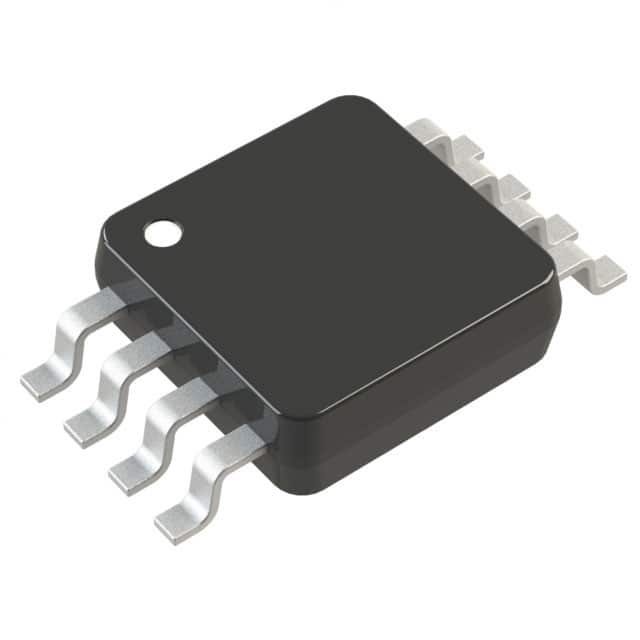
The PCA9512ADP,118 from NXP Semiconductors is a bidirectional buffer designed for I2C-bus and SMBus applications, enabling hot-swappable insertion and removal of I/O cards without data corruption.
This device provides level shifting capabilities between 3.3V and 5V systems, ensuring optimal noise margins. It operates within a supply voltage range of 2.7V to 5.5V and supports clock frequencies up to 400kHz. The buffer features built-in rise time accelerators on SDA and SCL lines, which can be disabled via an ACC pin for lightly loaded systems.
Key features include a 1V precharge on I/O pins during insertion to minimize current draw and isolation of backplane and card capacitances. The PCA9512ADP,118 is compatible with I2C-bus Standard mode, Fast mode, and SMBus standards.
Packaged in an 8-TSSOP, this buffer is suitable for surface mounting and is designed for applications requiring live board insertion and removal from multipoint backplane systems, such as cPCI, VME, and AdvancedTCA cards.
| Qty | Low | High |
|---|---|---|
| 1+ | $6.12 | $6.12 |
Estimated market price range - modelled values for guidance only, not live distributor offers.
The PCA9512ADP,118 operates from a supply voltage of 2.7V to 5.5V.
This buffer supports a maximum clock frequency of 400kHz.
The PCA9512ADP,118 is supplied in an 8-TSSOP package.
The operating temperature range is -40°C to 85°C.
Yes, it provides level shifting between 3.3V and 5V systems.
The rise time accelerators allow the use of weaker DC pull-up currents while still meeting rise time requirements.