

| Distributor | Stock | Pricing | MOQ | PKG | Lead Time | Date Code | On Order Quantity | On Order Delivery | |
|---|---|---|---|---|---|---|---|---|---|
|
1,500 pcs
|
1500 pcs | On Request | 1 | On Request | On Request | On Request | On Request | On Request |
| Category | |
| Manufacturer Name | |
| Configuration | |
| Current | |
| Current Consumption | |
| Display Type | |
| Interface | |
| Mounting Type | |
| Operating Temperature | |
| Supplier Device Package | |
| Supplier Package | |
| Voltage |
The PCA85176H/Q900/1,5 is a versatile LCD driver manufactured by NXP Semiconductors, configured for 40 segments. It operates with a power supply voltage ranging from 1.8 V to 5.5 V and supports a logic LCD supply voltage from 2.5 V to 8.0 V, accommodating various LCD types.
This device utilizes an I²C interface with a speed of up to 400 kHz, facilitating efficient communication. It includes 40 segment drives and a 40 x 4-bit RAM for display data storage. The driver offers selectable backplane drive configurations (static, 2, 3, or 4 multiplexing) and display bias configurations (static, 1/2, or 1/3).
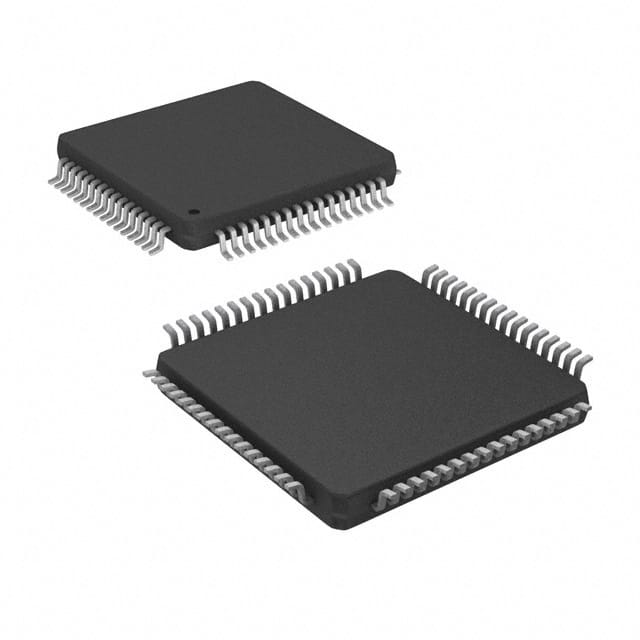
Packaged in a 64-TQFP (10x10) for surface mount applications, the PCA85176H/Q900/1,5 is designed to operate across a wide temperature range of -40 °C to 95 °C. Its low current consumption of 3.5 µA makes it suitable for power-sensitive designs. The device can be cascaded to support large LCD applications, potentially driving up to 2,560 segments/elements.
| Qty | Low | High |
|---|---|---|
| 1+ | $0.75 | $0.75 |
Estimated market price range - modelled values for guidance only, not live distributor offers.
The operating voltage range for the PCA85176H/Q900/1,5 is 1.8 V to 5.5 V.
The PCA85176H/Q900/1,5 operates within a temperature range of -40 °C to 95 °C.
The PCA85176H/Q900/1,5 uses an I²C interface.
The current consumption of the PCA85176H/Q900/1,5 is 3.5 µA.
The logic LCD supply voltage range is 2.5 V to 8.0 V.
The maximum I2C-bus interface speed is 400 kHz.
Up to 2,560 segments/elements are possible when cascading this device.