

| Distributor | Stock | Pricing | MOQ | PKG | Lead Time | Date Code | On Order Quantity | On Order Delivery | |
|---|---|---|---|---|---|---|---|---|---|
|
1,703 pcs
|
1703 pcs | On Request | 1 | On Request | On Request | On Request | On Request | On Request | |
|
46 pcs
|
46 pcs | On Request | 1 | On Request | On Request | On Request | On Request | On Request |
| Category | |
| Manufacturer Name | |
| Channel Type | |
| Channels per Circuit | |
| Features | |
| Mounting Type | |
| Number of Circuits | |
| Operating Temperature | |
| Output Type | |
| Propagation Delay | |
| Supplier Device Package | |
| Translator Type | |
| Voltage |
The NXP Semiconductors NVT2010BQ,118 is a versatile bidirectional voltage level translator designed for open-drain and push-pull applications. It operates across a wide voltage range, supporting Vref(A) from 1.0 V to 3.6 V and Vref(B) from 1.8 V to 5.5 V, enabling seamless translation between 1.0 V and 5 V.
This translator features auto-direction sensing, eliminating the need for a separate direction pin. It offers 10 channels per circuit with bidirectional data flow capabilities. The device boasts a low ON-state resistance of 3.5 Ω for minimal signal distortion and a maximum propagation delay of 1.5 ns, supporting transmission speeds up to 33 MHz in open-drain systems.
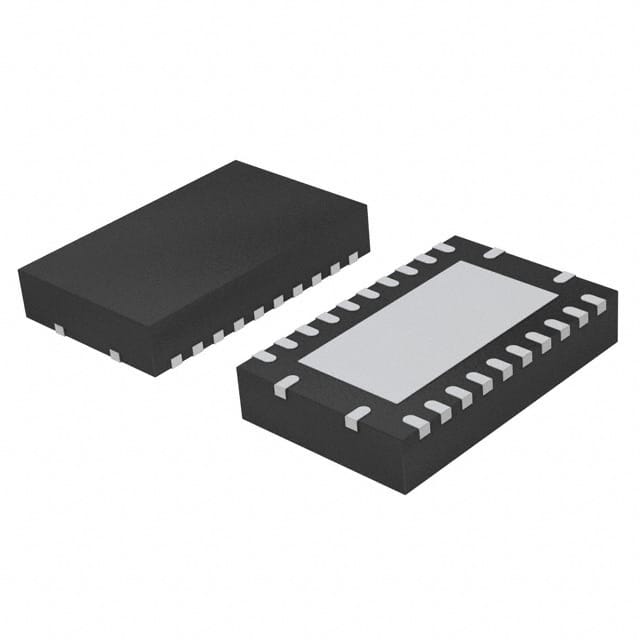
Packaged in a 24-DHVQFN (5.5x3.5) with a surface mount type, the NVT2010BQ,118 is suitable for various electronic designs. It operates within a temperature range of -40°C to 85°C (TA). The translator provides excellent ESD protection and lock-up-free operation, making it a reliable choice for mixed-mode signal applications.
| Qty | Low | High |
|---|---|---|
| 1+ | $0.12 | $0.12 |
Estimated market price range - modelled values for guidance only, not live distributor offers.
Vref(A): 1 V to 3.6 V, Vref(B): 1.8 V to 5.5 V.
24-VFQFN Exposed Pad, also supplied as 24-DHVQFN (5.5x3.5 mm).
-40°C to 85°C (TA).
10 bidirectional channels.
Up to 33 MHz in open-drain system with 50 pF capacitance and 197 Ω pull-up.
Yes, it has auto-direction sensing.
Typical 1.5 ns maximum.