

| Distributor | Stock | Pricing | MOQ | PKG | Lead Time | Date Code | On Order Quantity | On Order Delivery | |
|---|---|---|---|---|---|---|---|---|---|
|
10,000 pcs
|
10000 pcs | On Request | 1 | On Request | On Request | On Request | On Request | On Request |
| Category | |
| Manufacturer Name | |
| Current | |
| Input Voltage | |
| Lead Spacing | |
| Mounting Type | |
| Number of Elements | |
| Operating Temperature | |
| Output Type | |
| Propagation Delay (Max) | |
| Supplier Device Package | |
| Supply Voltage | |
| Tape & Reel | |
| Type | |
| Voltage |
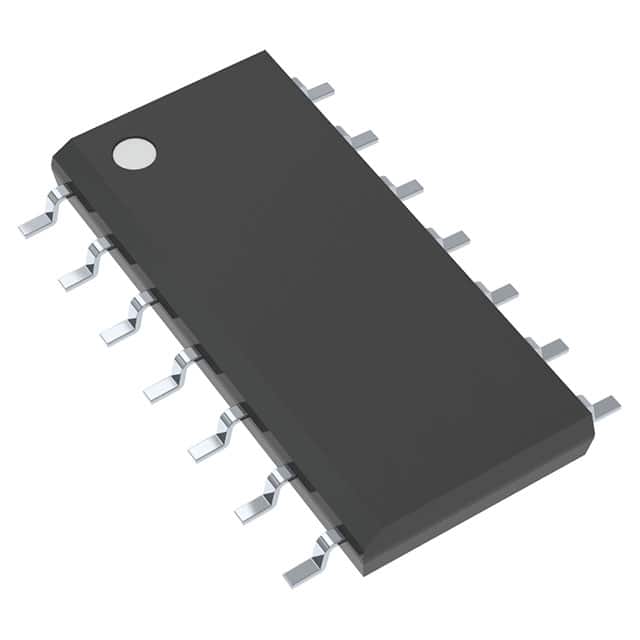
The NE521DR2G is a dual differential comparator IC manufactured by On Semiconductor. It is designed for high-speed applications and offers TTL-compatible strobes and outputs. The device operates from standard supply voltages and features a large common-mode input voltage range.
Key electrical specifications include a maximum propagation delay of 12ns and a maximum supply current of 35mA. The input offset voltage is a maximum of 6mV at 25°C, with an input bias current of 7.5nA at 25°C. The maximum differential input voltage is 6V, and the common-mode input voltage is up to 5.25V.
This comparator is housed in a 14-SOIC surface mount package, suitable for various electronic designs. The operating temperature range is from 0°C to 70°C. Applications include MOS memory sense amps, A-to-D conversion, and high-speed line receivers.
Environmental compliance includes RoHS3 compliance, MSL 1 (Unlimited) moisture sensitivity level, and REACH unaffected status. These attributes make the NE521DR2G a reliable choice for many industrial and commercial electronic systems.
| Qty | Low | High |
|---|---|---|
| 1+ | $0.36 | $0.36 |
Estimated market price range - modelled values for guidance only, not live distributor offers.
The NE521DR2G has a minimum operating voltage of 9.5V.
The NE521DR2G is packaged in a 14-SOIC surface-mount package.
The maximum propagation delay is 12 nanoseconds.
The maximum differential input voltage is 6V.
The input offset voltage is 6 millivolts.
The maximum power dissipation is 1040 milliwatts at 25°C.