

| Distributor | Stock | Pricing | MOQ | PKG | Lead Time | Date Code | On Order Quantity | On Order Delivery | |
|---|---|---|---|---|---|---|---|---|---|
|
55,262 pcs
|
55262 pcs | On Request | 1 | On Request | On Request | On Request | On Request | On Request |
| Category | |
| Manufacturer Name | |
| AEC Qualified | |
| Automotive Grade | |
| Control Features | |
| Current | |
| Halogen Free | |
| Mounting Type | |
| Number of Regulators | |
| Operating Temperature | |
| Output Configuration | |
| Output Type | |
| PSRR | |
| Protection Features | |
| Quiescent Current | |
| Storage Temperature | |
| Supplier Device Package | |
| Voltage |
The NCV8170AXV150T2G is an ultra-low quiescent current CMOS low dropout regulator from ON Semiconductor, designed for battery-powered applications requiring extended battery life. It operates within an input voltage range of 2.2 V to 5.5 V and provides a fixed output voltage.
Key electrical specifications include an output current capability of 150 mA, a typical quiescent current of 0.5 µA, and a low dropout voltage of 170 mV at 150 mA. The regulator boasts high output voltage accuracy of ±1% and is stable with ceramic capacitors. Protection features include over-current and thermal shutdown protection.
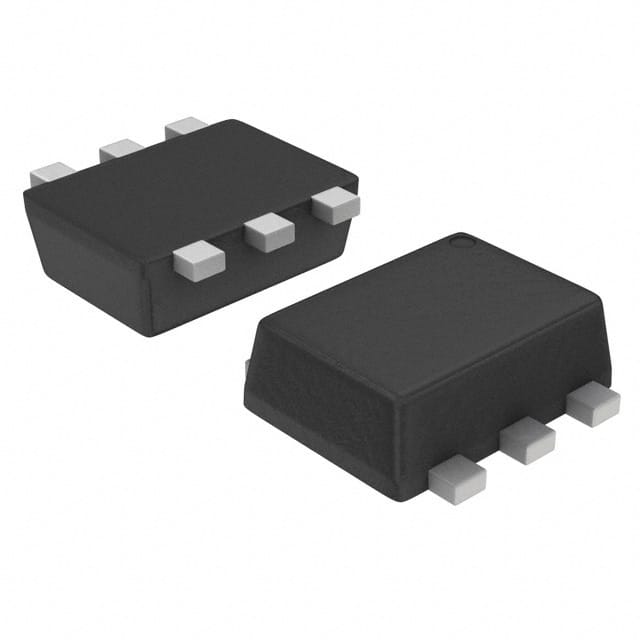
This device is available in a compact SOT-563 package, suitable for surface mount applications. The NCV prefix indicates its suitability for automotive and other applications requiring unique site and control change requirements, being AEC-Q100 qualified and PPAP capable. It is also Pb-free, halogen-free/BFR-free, and RoHS compliant.
Typical applications include telematics and infotainment systems, automotive keyless entry systems, ADAS camera modules, and navigation systems.
| Qty | Low | High |
|---|---|---|
| 1+ | $0.28 | $0.28 |
Estimated market price range - modelled values for guidance only, not live distributor offers.
The input voltage range is 2.2 V to 5.5 V.
The output voltage range is 1.2 V to 3.6 V.
The NCV8170AXV150T2G can supply up to 150 mA of output current.
The typical quiescent current is 0.5 µA.
It is available in a SOT-563 package.
The operating temperature range is -40°C to 125°C.
Yes, it includes over-current protection.