

| Distributor | Stock | Pricing | MOQ | PKG | Lead Time | Date Code | On Order Quantity | On Order Delivery | |
|---|---|---|---|---|---|---|---|---|---|
|
1,000 pcs
|
1000 pcs | On Request | 1 | On Request | On Request | On Request | On Request | On Request |
| Category | |
| Manufacturer Name | |
| Applications | |
| Automotive Grade | |
| Current | |
| Dimming | |
| Frequency | |
| Internal Switch(s) | |
| Mounting Type | |
| Number of Outputs | |
| Operating Temperature | |
| SVHC Present | |
| Supplier Device Package | |
| Supplier Package | |
| Topology | |
| Type | |
| Voltage |
The NCV78763MW4AR2G is an automotive-grade LED driver from On Semiconductor, designed as a DC DC regulator with dual outputs. It delivers up to 1.6A per output at 4V, making it suitable for driving high-brightness LEDs in automotive lighting systems. The device supports both analog and PWM dimming for flexible brightness control.
With an 8MHz switching frequency, the NCV78763MW4AR2G enables compact external component selection. It integrates internal switches and supports step-down (buck) and step-up (boost) topologies, providing design versatility for various LED configurations. The operating temperature range of -40°C to 150°C (TJ) ensures reliable performance in harsh automotive environments.
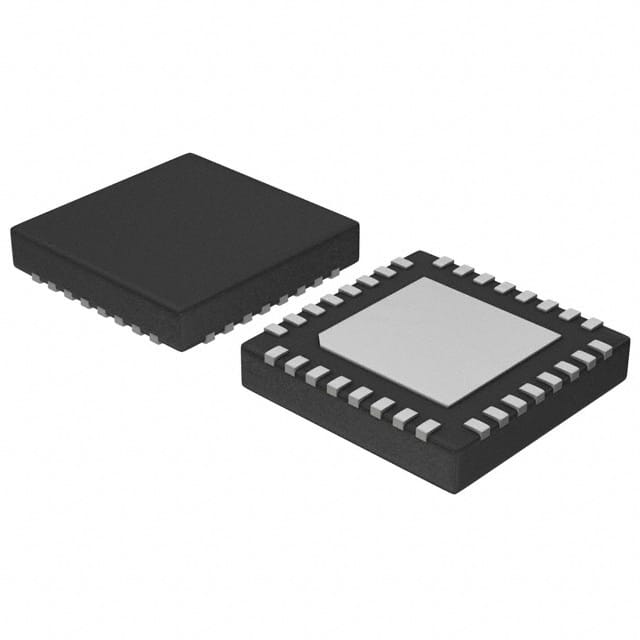
The driver is housed in a 32-VFQFN exposed pad package with a wettable flank option (32-QFNW 5x5), suitable for surface mount assembly. It is designed for automotive applications such as headlamps, daytime running lights, and interior lighting.
| Qty | Low | High |
|---|---|---|
| 1+ | $0.17 | $0.17 |
Estimated market price range - modelled values for guidance only, not live distributor offers.
The operating temperature range is -40°C to 150°C (junction temperature).
The device is available in a 32-VFQFN exposed pad package, also specified as 32-QFNW (5x5) with wettable flank.
The output voltage is 4V.
Each output can deliver up to 1.6A.
Yes, it supports both analog and PWM dimming.
The switching frequency is 8MHz.
It supports step-down (buck) and step-up (boost) topologies.