

| Distributor | Stock | Pricing | MOQ | PKG | Lead Time | Date Code | On Order Quantity | On Order Delivery | |
|---|---|---|---|---|---|---|---|---|---|
|
2,200 pcs
|
2200 pcs | On Request | 1 | On Request | On Request | On Request | On Request | On Request |
| Category | |
| Manufacturer Name | |
| AEC Qualified | |
| Automotive Grade | |
| Differential | |
| Frequency | |
| Industrial Grade | |
| Input | |
| Medical Grade | |
| Military Grade | |
| Mounting Type | |
| Number of Circuits | |
| Operating Temperature | |
| Output | |
| Package / Case | |
| Propagation Delay | |
| Ratio | |
| Supplier Device Package | |
| Tape & Reel | |
| Type | |
| Voltage |
The NB7VQ14MMNHTBG is a differential 1:4 CML fanout buffer designed for high-speed clock and data distribution applications. It features a selectable input equalizer that compensates for signal degradation across FR4 PCB backplanes or cable interconnects.
This buffer supports input clock frequencies exceeding 8 GHz and input data rates over 14 Gb/s. It provides four identical CML outputs and operates with a power supply ranging from 1.71V to 3.6V. The device offers low output skew, typically less than 15 ps, and low RMS clock jitter of less than 0.8 ps.
The NB7VQ14MMNHTBG includes internal 50 Ohm termination resistors on its differential inputs, allowing it to accept various logic level standards such as LVPECL, CML, or LVDS. The equalizer function is controlled via the EQEN pin, with a default state of LOW at startup, bypassing the equalizer.
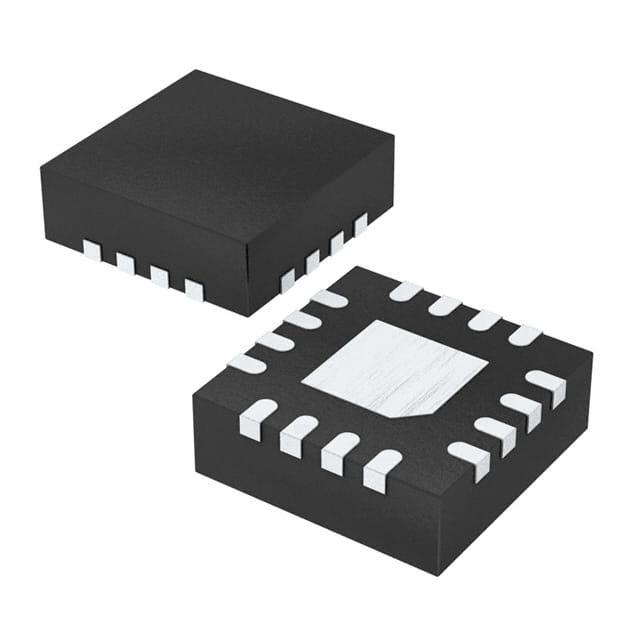
Packaged in a 16-VFQFN exposed pad, this surface-mount device is suitable for applications including SONET, GigE, Fiber Channel, and backplane clock/data distribution. It operates within an ambient temperature range of -40°C to +85°C.
| Qty | Low | High |
|---|---|---|
| 1+ | $4.44 | $4.44 |
Estimated market price range - modelled values for guidance only, not live distributor offers.
The maximum input data rate is greater than 14 Gb/s.
The input clock frequency exceeds 8 GHz.
It uses a 16-VFQFN exposed pad package.
The typical propagation delay is 165 picoseconds.
It supports CML, LVDS, and LVPECL differential inputs.
-40°C to 85°C.
Yes, it is RoHS3 compliant.