

| Distributor | Stock | Pricing | MOQ | PKG | Lead Time | Date Code | On Order Quantity | On Order Delivery | |
|---|---|---|---|---|---|---|---|---|---|
|
51,657 pcs
|
51657 pcs | On Request | 1 | On Request | On Request | On Request | On Request | On Request | |
|
3,220 pcs
|
3220 pcs | On Request | 1 | On Request | On Request | On Request | On Request | On Request |
| Category | |
| Manufacturer Name | |
| Connectivity | |
| Core Processor | |
| Core Size | |
| Frequency | |
| Lead Spacing | |
| Mounting Type | |
| Number of I | |
| Operating Temperature | |
| Oscillator Type | |
| Peripherals | |
| Program Memory Size | |
| Program Memory Type | |
| RAM Size | |
| Speed | |
| Supplier Device Package | |
| Supplier Package | |
| Voltage |
The MSP430G2513IPW20 from Texas Instruments is a low-power, 16-bit microcontroller based on the MSP430 CPU16 core. It offers 16KB of FLASH program memory and 512 bytes of SRAM, making it suitable for a variety of embedded applications.
This microcontroller operates at frequencies up to 16MHz with an internal oscillator. It supports a wide voltage range from 1.8V to 3.6V, contributing to its ultra-low power consumption characteristics. Key peripherals include I²C, SPI, and UART communication interfaces, along with a brown-out detector, watchdog timer, and up to 16 GPIO pins.
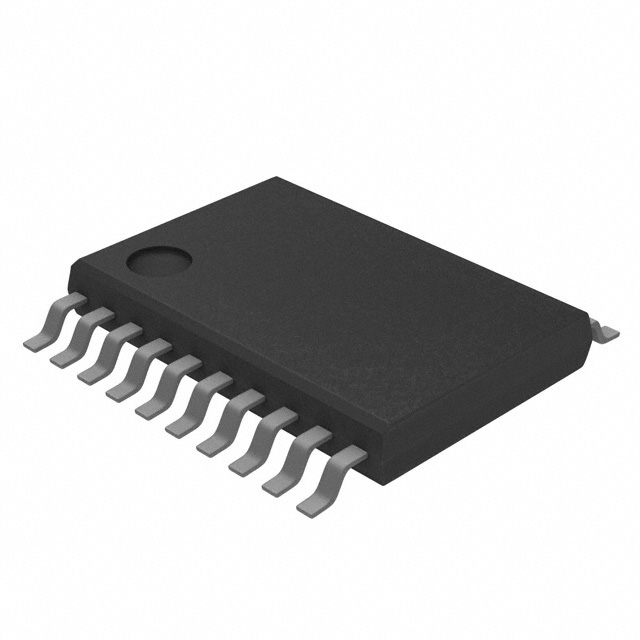
The MSP430G2513IPW20 is supplied in a 20-TSSOP package, designed for surface mounting. Its operating temperature range is -40°C to 85°C (TA), ensuring reliable performance in various environmental conditions. This device is part of the broader MSP430 family, known for its efficiency and compact design.
| Qty | Low | High |
|---|---|---|
| 1+ | $1.51 | $1.51 |
Estimated market price range - modelled values for guidance only, not live distributor offers.
The operating voltage range is 1.8V to 3.6V.
The MSP430G2513IPW20 is available in a 20-TSSOP package.
The operating temperature range is -40°C to 85°C.
The program memory size is 16KB.
The RAM size is 512 bytes.
It supports I²C, IrDA, LINbus, SCI, SPI, and UART/USART interfaces.