

| Distributor | Stock | Pricing | MOQ | PKG | Lead Time | Date Code | On Order Quantity | On Order Delivery | |
|---|---|---|---|---|---|---|---|---|---|
|
61,477 pcs
|
61477 pcs | On Request | 1 | On Request | On Request | On Request | On Request | On Request | |
|
48,211 pcs
|
48211 pcs | On Request | 1 | On Request | On Request | 15+ | On Request | On Request | |
|
30 pcs
|
30 pcs | On Request | 1 | On Request | On Request | On Request | On Request | On Request |
| Category | |
| Manufacturer Name | |
| Approval Agency | |
| Current | |
| Mounting Type | |
| Number of Channels | |
| Operating Temperature | |
| Output Type | |
| Supplier Device Package | |
| Supplier Package | |
| Tape & Reel | |
| Voltage | |
| Zero Crossing Circuit |
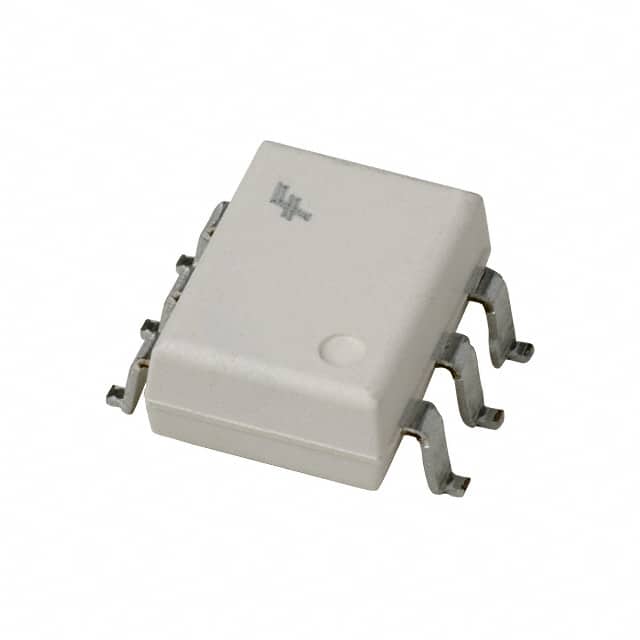
The MOC3021SR2M from ON Semiconductor is an optically isolated triac driver optocoupler. It is designed to interface between electronic controls and power triacs for controlling resistive and inductive loads. This device features a peak blocking voltage of 400V and an isolation voltage of 4170Vrms.
The optocoupler contains a GaAs infrared emitting diode and a light-activated silicon bilateral switch that functions like a triac. It has a maximum LED trigger current (IFT) of 15mA and operates without a zero crossing circuit. The operating temperature range is -40°C to 85°C.
This component is supplied in a 6-SMD, Gull Wing package, suitable for surface mounting. It is RoHS3 compliant and has an MSL rating of 1.
Applications for the MOC3021SR2M include industrial controls, solenoid/valve controls, traffic lights, static AC power switches, vending machines, incandescent lamp dimmers, solid-state relays, motor control, and lamp ballasts.
| Qty | Low | High |
|---|---|---|
| 1+ | $7.60 | $7.60 |
Estimated market price range - modelled values for guidance only, not live distributor offers.
The peak blocking voltage is 400 V.
The isolation voltage is 4170Vrms.
The operating temperature range is -40°C to 85°C.
It is supplied in a 6-SMD, Gull Wing package.
No, the MOC3021SR2M does not have a zero crossing circuit.