

| Distributor | Stock | Pricing | MOQ | PKG | Lead Time | Date Code | On Order Quantity | On Order Delivery | |
|---|---|---|---|---|---|---|---|---|---|
|
178 pcs
|
178 pcs | On Request | 1 | On Request | On Request | On Request | On Request | On Request |
| Category | |
| Manufacturer Name | |
| Current | |
| Function | |
| Height | |
| Length | |
| Logic Type | |
| Mounting Style | |
| Mounting Type | |
| Number of Bits per Element | |
| Number of Channels | |
| Number of Circuits | |
| Number of Elements | |
| Operating Temperature | |
| Output Type | |
| Power Dissipation | |
| Quiescent Current | |
| Supplier Device Package | |
| Supply Current | |
| Technology | |
| Voltage | |
| Width |
The MM74HCT245MTC from ON Semiconductor is an octal 3-state transceiver built with advanced silicon-gate CMOS technology. It is designed for efficient two-way asynchronous communication between data buses. This device features high drive current outputs, enabling high-speed operation even when driving significant bus capacitances, while maintaining low CMOS power consumption.
Key electrical characteristics include a supply voltage range of 4.5V to 5.5V and TTL-compatible inputs. The transceiver offers 8 channels with 3-state outputs, suitable for connection to system buses. It provides a typical propagation delay of 16 ns and can drive up to 15 LS-TTL loads. The operating temperature range is -40°C to 85°C.
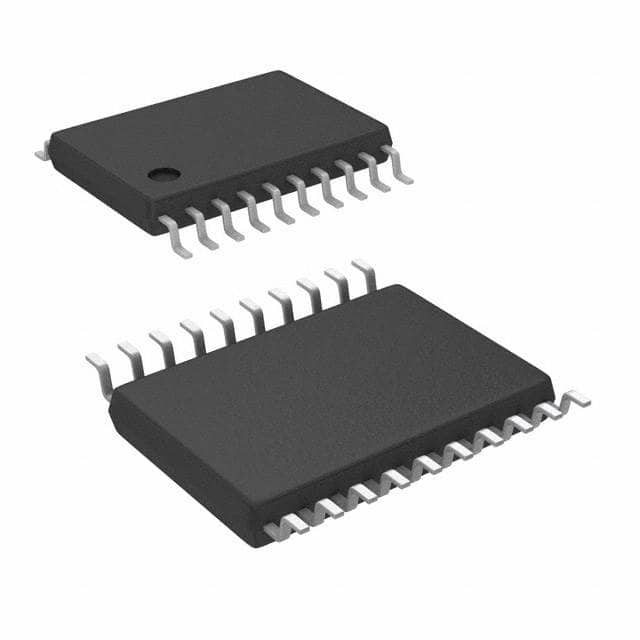
Packaged in a 20-TSSOP, the MM74HCT245MTC is designed for surface mounting. Its 3-state outputs are controlled by an enable input (G) and a direction control input (DIR), allowing data flow in either direction between the A and B buses. This makes it a versatile component for interfacing between TTL and CMOS logic levels, and a plug-in replacement for LS-TTL devices to reduce power consumption.
| Qty | Low | High |
|---|---|---|
| 1+ | $1.20 | $1.20 |
Estimated market price range - modelled values for guidance only, not live distributor offers.
4.5V to 5.5V.
-40°C to 85°C.
20-TSSOP (TSSOP-20).
74HCT.
8 channels.
3-State.
The typical propagation delay is 16 ns per the datasheet, and the manufacturer page specifies 30 ns.