

| Distributor | Stock | Pricing | MOQ | PKG | Lead Time | Date Code | On Order Quantity | On Order Delivery | |
|---|---|---|---|---|---|---|---|---|---|
|
4,000 pcs
|
4000 pcs | On Request | 1 | On Request | On Request | On Request | On Request | On Request |
| Category | |
| Manufacturer Name | |
| Access Time | |
| Memory Format | |
| Memory Interface | |
| Memory Organization | |
| Memory Size | |
| Memory Type | |
| Mounting Type | |
| Operating Temperature | |
| Supplier Device Package | |
| Supplier Package | |
| Technology | |
| Voltage |
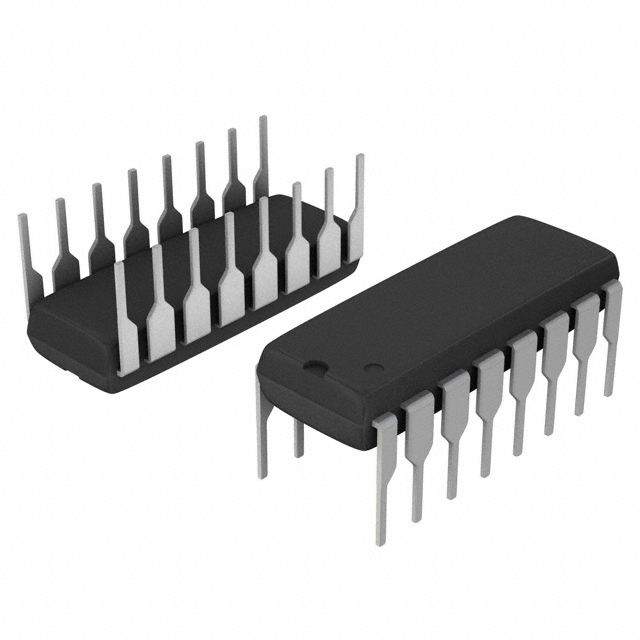
The MM74C89N from ON Semiconductor is a 64-bit random access read/write memory organized as 16 words by 4 bits. It operates with a wide supply voltage range from 3V to 15V and offers a fast access time of 130 ns typical at 10V. The memory interface is parallel, and it supports a 3-STATE output condition.
This device is designed for through-hole mounting and operates within an extended temperature range of -55°C to 125°C. Key features include guaranteed noise margin of 1.0V and high noise immunity. The MM74C89N is suitable for applications requiring a compact and reliable memory solution with low power consumption.
Features include a 16-word by 4-bit organization, internal address decoding, and a memory enable input that latches address information. The 3-STATE data output lines facilitate memory expansion. Write operations occur when write enable and memory enable are low, while read operations occur when memory enable is low and write enable is high.
| Qty | Low | High |
|---|---|---|
| 1+ | $1.28 | $1.28 |
Estimated market price range - modelled values for guidance only, not live distributor offers.
The MM74C89N operates within a voltage range of 3V to 15V.
The operating temperature range for the MM74C89N is -55°C to 125°C.
The MM74C89N is a volatile RAM (Random Access Memory).
The MM74C89N has a memory organization of 16 words by 4 bits, totaling 64 bits.
The typical access time for the MM74C89N is 130 ns at 10V, with a listed value of 280 ns.
The MM74C89N is mounted using the through-hole method.