

| Distributor | Stock | Pricing | MOQ | PKG | Lead Time | Date Code | On Order Quantity | On Order Delivery | |
|---|---|---|---|---|---|---|---|---|---|
|
3,776 pcs
|
3776 pcs | On Request | 1 | On Request | On Request | On Request | On Request | On Request |
| Category | |
| Manufacturer Name | |
| Clock Frequency | |
| Connectivity | |
| Core Processor | |
| Core Size | |
| Data Converters | |
| EEPROM Size | |
| Lead Spacing | |
| Mounting Type | |
| Number of I | |
| Operating Temperature | |
| Oscillator Type | |
| Peripherals | |
| Program Memory Size | |
| Program Memory Type | |
| RAM Size | |
| Security Features | |
| Speed | |
| Supplier Device Package | |
| Voltage |
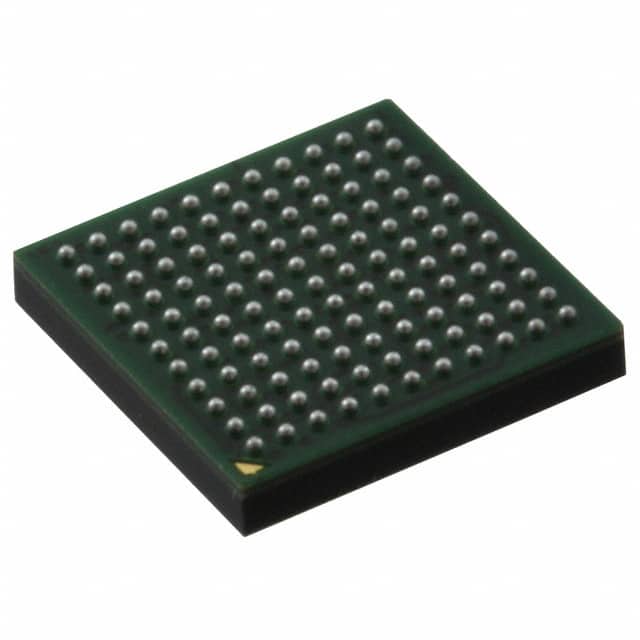
The NXP Semiconductors MK20DX256VMC7R is a powerful 32-bit microcontroller based on the ARM Cortex-M4 core. It offers a substantial 256KB of FLASH program memory and 64KB of RAM, running at a clock speed of 72MHz.
This microcontroller is equipped with a wide array of peripherals including DMA, I2S, LVD, POR, PWM, and WDT, along with various communication interfaces such as CANbus, EBI/EMI, I2C, IrDA, SPI, UART/USART, and USB OTG. It also includes analog modules like ADCs and DACs, and multiple timer options.
The MK20DX256VMC7R operates within a voltage range of 1.71V to 3.6V and has an ambient temperature range of -40°C to 105°C. It is supplied in a 121-MAPBGA (8x8) surface mount package.
Key features include a hardware CRC module for data integrity checks and a 128-bit unique identification number per chip. Its design supports multiple low-power modes for power optimization, making it suitable for a variety of embedded applications.
| Qty | Low | High |
|---|---|---|
| 1+ | $6.40 | $6.40 |
Estimated market price range - modelled values for guidance only, not live distributor offers.
The operating voltage range is 1.71V to 3.6V.
The operating temperature range is -40°C to 105°C.
It is supplied in a 121-MAPBGA (8x8) or 121-LFBGA package.
The program memory size is 256KB.
The RAM size is 64K x 8.
The core processor is ARM Cortex-M4.
Available communication interfaces include CANbus, EBI/EMI, I2C, IrDA, SPI, UART/USART, and USB OTG.