

| Distributor | Stock | Pricing | MOQ | PKG | Lead Time | Date Code | On Order Quantity | On Order Delivery | |
|---|---|---|---|---|---|---|---|---|---|
|
31,039 pcs
|
31039 pcs | On Request | 1 | On Request | On Request | 2020+ | On Request | On Request |
| Category | |
| Manufacturer Name | |
| Current | |
| Fault Protection | |
| Features | |
| Input Type | |
| Interface | |
| Lead Style | |
| Mounting Type | |
| Number of Outputs | |
| Operating Temperature | |
| Output Configuration | |
| Output Type | |
| Ratio | |
| Rds On (Typ) | |
| SVHC Present | |
| Supplier Device Package | |
| Switch Type | |
| Voltage | |
| Voltage Supply |
The MIC2033-05AYM6-T5 from Microchip Technology is a general-purpose P-Channel power switch designed for various applications. It offers a 1:1 input to output ratio and operates with a load voltage range of 2.5V to 5.5V.
Key electrical specifications include a maximum output current of 500mA and a typical Rds On of 75mOhm. The device features include slew rate control and a status flag, along with fault protection mechanisms such as current limiting, over-temperature protection, and undervoltage lockout (UVLO).
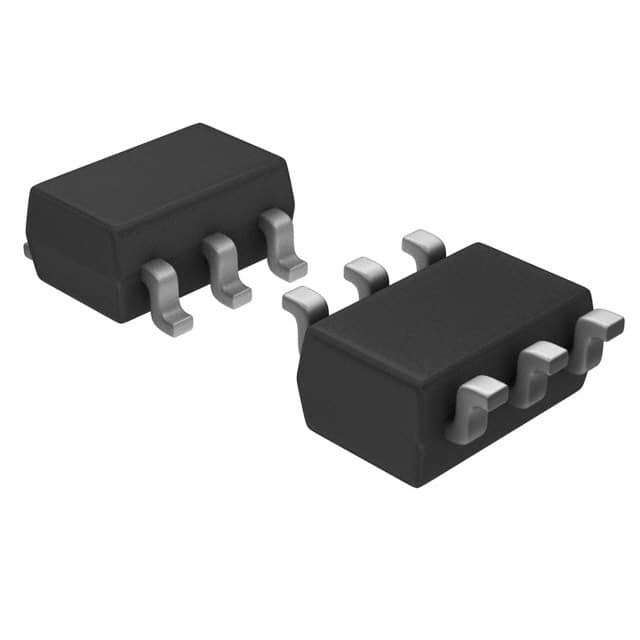
This power switch IC is designed for surface mounting and comes in a compact SOT-23-6 package. It operates within a temperature range of -40°C to 125°C (TJ). The interface is controlled via an On/Off signal, making it suitable for applications requiring efficient power management.
It is classified under Power Management (PMIC) and specifically within Power Distribution Switches, Load Drivers. The component is suitable for general-purpose switching applications where reliable power control is essential.
| Qty | Low | High |
|---|---|---|
| 1+ | $0.32 | $0.32 |
Estimated market price range - modelled values for guidance only, not live distributor offers.
The load voltage range is 2.5V to 5.5V.
The maximum output current is 500mA.
SOT-23-6 (surface-mount).
-40°C to +125°C (junction temperature).
High-side P-channel.
Yes, fixed current limiting, over-temperature protection, and undervoltage lockout.