

| Distributor | Stock | Pricing | MOQ | PKG | Lead Time | Date Code | On Order Quantity | On Order Delivery | |
|---|---|---|---|---|---|---|---|---|---|
|
1,480 pcs
|
1480 pcs | On Request | 1 | On Request | On Request | On Request | On Request | On Request | |
|
518 pcs
|
518 pcs | On Request | 1 | On Request | On Request | 20+ | On Request | On Request |
| Category | |
| Manufacturer Name | |
| Data Rate | |
| Duplex | |
| Lead Spacing | |
| Mounting Type | |
| Number of Drivers | |
| Operating Temperature | |
| Protection Features | |
| Protocol | |
| Receiver Hysteresis | |
| Supplier Device Package | |
| Type | |
| Voltage |
The MCP2551-E/SN from Microchip Technology is a fault-tolerant, high-speed CAN transceiver designed to interface between a CAN protocol controller and the physical bus. It supports operation at speeds up to 1 Mb/s and is fully compatible with the ISO-11898 standard, including 24V requirements. This device is suitable for both 12V and 24V automotive systems.
Key features include externally-controlled slope for reduced RFI emissions, detection of ground faults on the TXD input, and protection against short-circuit conditions, high-voltage transients, and automatic thermal shutdown. It also offers power-on reset and voltage brown-out protection, ensuring that an unpowered node or brown-out event does not disturb the CAN bus. The transceiver operates within a voltage range of 4.5V to 5.5V and has a wide operating temperature range of -40°C to +125°C.
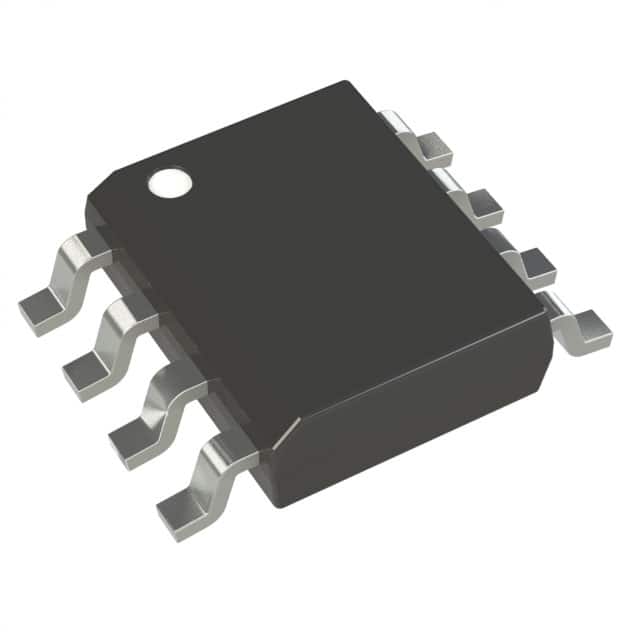
Packaged in an 8-SOIC (0.154", 3.90mm Width) surface-mount package, the MCP2551-E/SN provides high-noise immunity due to its differential bus implementation. It supports up to 112 nodes on the bus, making it a robust solution for various automotive and industrial CAN network applications.
| Qty | Low | High |
|---|---|---|
| 1+ | $1.44 | $1.44 |
Estimated market price range - modelled values for guidance only, not live distributor offers.
The operating temperature range is -40°C to +125°C.
The MCP2551-E/SN is supplied in an 8-SOIC package.
The operating voltage is between 4.5V and 5.5V.
Yes, it implements the ISO-11898 standard physical layer requirements.