

| Distributor | Stock | Pricing | MOQ | PKG | Lead Time | Date Code | On Order Quantity | On Order Delivery | |
|---|---|---|---|---|---|---|---|---|---|
|
27,055 pcs
|
27055 pcs | On Request | 1 | On Request | On Request | 2020+ | On Request | On Request |
| Category | |
| Manufacturer Name | |
| Clock Sync | |
| Control Features | |
| Duty Cycle (Max) | |
| Frequency | |
| Function | |
| Halogen Free | |
| Lead Style | |
| Mounting Type | |
| Number of Outputs | |
| Operating Temperature | |
| Output Configuration | |
| Output Phases | |
| Output Type | |
| Quiescent Current | |
| SVHC Present | |
| Supplier Device Package | |
| Supplier Package | |
| Synchronous Rectifier | |
| Topology | |
| Voltage |
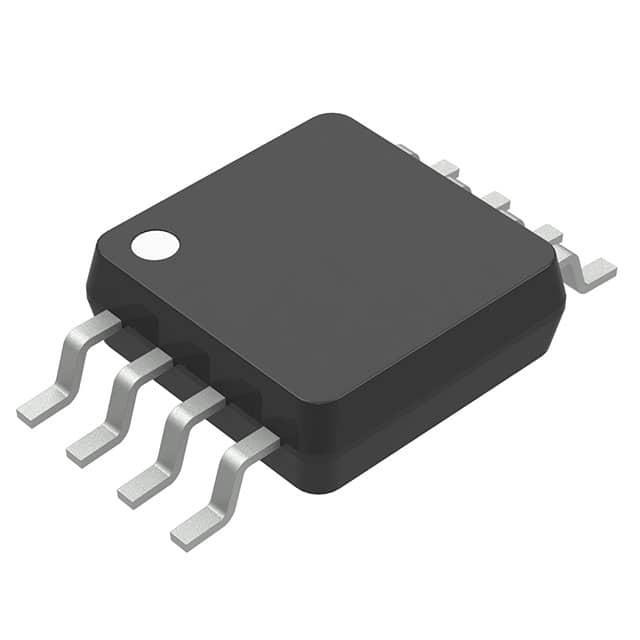
The MCP1652S-E/MS from Microchip Technology is a 750 kHz gated oscillator boost controller. It is designed for high-power, portable applications and can deliver over 5 watts of power to the load. The device operates over a wide input voltage range of 2.7V to 5.5V, making it suitable for battery-powered applications.
Key features include a 750 kHz switching frequency, which minimizes the size of external components, and an adaptable duty cycle for battery or wide-input voltage range applications. It supports Boost, Flyback, and SEPIC topologies. The controller includes features such as current limit, enable, low battery detection, and power good indication.
Packaged in an 8-MSOP surface mount package, the MCP1652S-E/MS is suitable for space-constrained designs. Its operating temperature range is -40°C to +125°C.
This controller is ideal for high-power boost applications, high-voltage bias supplies, white LED drivers, and various local supply requirements.
| Qty | Low | High |
|---|---|---|
| 1+ | $0.78 | $0.78 |
Estimated market price range - modelled values for guidance only, not live distributor offers.
The input voltage range is 2.7V to 5.5V.
The switching frequency is 750kHz.
The operating temperature range is -40°C to +125°C.
The MCP1652S-E/MS is available in an 8-MSOP package.
It supports Boost, Flyback, and SEPIC topologies.
Key control features include current limit, enable, low battery, and power good.