

| Distributor | Stock | Pricing | MOQ | PKG | Lead Time | Date Code | On Order Quantity | On Order Delivery | |
|---|---|---|---|---|---|---|---|---|---|
|
2,000 pcs
|
2000 pcs | On Request | 1 | On Request | On Request | On Request | On Request | On Request |
| Category | |
| Manufacturer Name | |
| Clock Frequency | |
| Current | |
| Function | |
| Input Capacitance | |
| Max Propagation Delay @ V, Max CL | |
| Mounting Type | |
| Number of Bits per Element | |
| Number of Elements | |
| Operating Temperature | |
| Output Type | |
| Supplier Device Package | |
| Supplier Package | |
| Trigger Type | |
| Type | |
| Voltage |
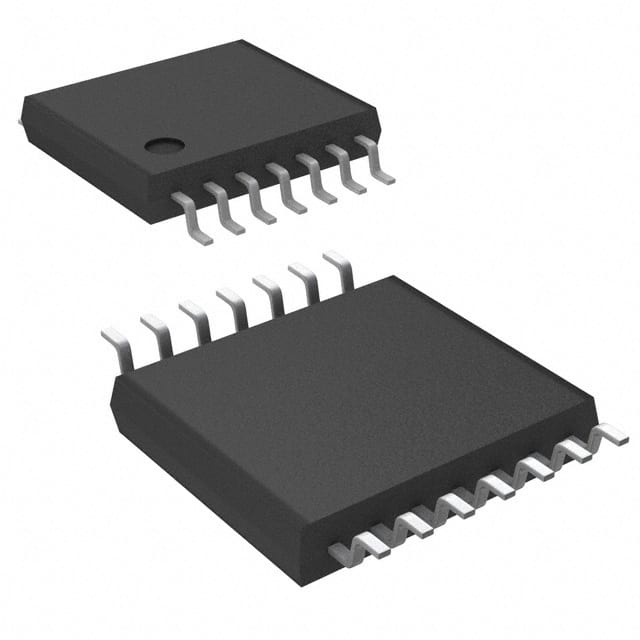
The MC74ACT74DTR2 from ON Semiconductor is a dual D-Type positive edge-triggered flip-flop. Each flip-flop features complementary outputs and independent asynchronous set and reset inputs. Information at the data input is transferred to the outputs on the positive edge of the clock pulse.
This device offers a maximum clock frequency of 210 MHz and a maximum propagation delay of 11ns at 5V and 50pF. It operates within a supply voltage range of 4.5V to 5.5V and has a typical quiescent current of 4 µA. The inputs are TTL compatible, and the outputs can source or sink up to 24 mA.
Packaged in a 14-TSSOP, the MC74ACT74DTR2 is designed for surface mounting. Its operating temperature range is -40°C to 85°C (TA). This component is suitable for digital logic applications requiring reliable flip-flop functionality.
Key features include dual flip-flop elements, positive edge triggering, and asynchronous set/reset capabilities. The device is Pb-Free, aligning with environmental standards.
| Qty | Low | High |
|---|---|---|
| 1+ | $0.86 | $0.86 |
Estimated market price range - modelled values for guidance only, not live distributor offers.
The supply voltage range is 4.5V to 5.5V.
The maximum clock frequency is 210MHz.
The operating temperature range is -40°C to 85°C.
It is available in a 14-TSSOP surface-mount package.
Yes, the device has TTL-compatible inputs.
The typical quiescent current is 4µA.
The maximum propagation delay is 11ns at 5V and 50pF load.