

| Distributor | Stock | Pricing | MOQ | PKG | Lead Time | Date Code | On Order Quantity | On Order Delivery | |
|---|---|---|---|---|---|---|---|---|---|
|
295 pcs
|
295 pcs | On Request | 1 | On Request | On Request | On Request | On Request | On Request |
| Category | |
| Manufacturer Name | |
| Clock Frequency | |
| Current | |
| Function | |
| Input Capacitance | |
| Lead Spacing | |
| Max Propagation Delay @ V, Max CL | |
| Mounting Type | |
| Number of Bits per Element | |
| Number of Elements | |
| Operating Temperature | |
| Output Type | |
| Supplier Device Package | |
| Trigger Type | |
| Type | |
| Voltage |
The ON Semiconductor MC74ACT574DWR2G is an octal D-type flip-flop designed for high-speed applications. It stores data presented to its D inputs on the low-to-high clock transition and features buffered common clock and output enable inputs. The device offers 3-state outputs, making it suitable for bus-oriented applications.
Key electrical characteristics include a maximum clock frequency of 100 MHz and a propagation delay of 11ns at 5V and 50pF. It operates over a voltage range of 4.5V to 5.5V and consumes a quiescent current of 8 µA. The input capacitance is 4.5 pF.
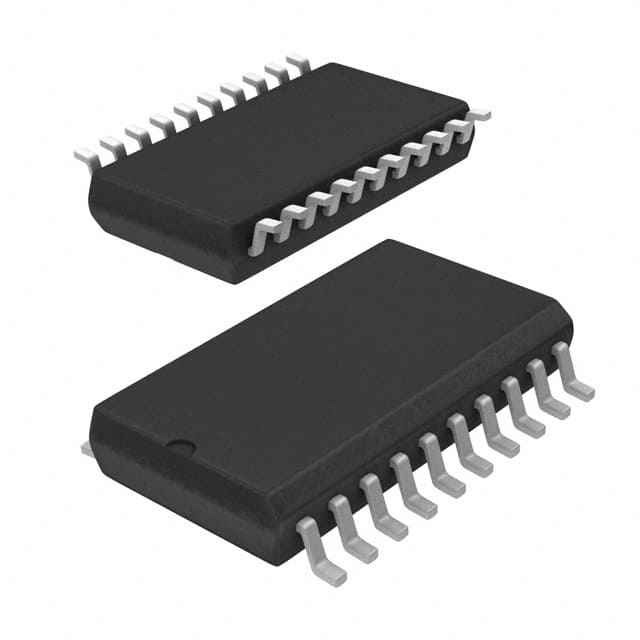
Packaged in a 20-SOIC (0.295", 7.50mm Width) format, this surface-mount device is designed for easy interface with microprocessors. Its inputs and outputs are on opposite sides of the package, facilitating straightforward connections.
The MC74ACT574DWR2G is functionally identical to the MC74AC374/74ACT374, differing only in pinouts. It is specified for operation within an ambient temperature range of -40°C to 85°C.
| Qty | Low | High |
|---|---|---|
| 1+ | $0.86 | $0.86 |
Estimated market price range - modelled values for guidance only, not live distributor offers.
The operating voltage range is 4.5V to 5.5V.
It is available in a 20-SOIC surface mount package with a body width of 7.50 mm.
The operating temperature range is -40°C to 85°C.
The maximum clock frequency is 100 MHz.
The maximum propagation delay is 11 ns at 5V and 50 pF load.
It has tri-state, non-inverted outputs.