

| Distributor | Stock | Pricing | MOQ | PKG | Lead Time | Date Code | On Order Quantity | On Order Delivery | |
|---|---|---|---|---|---|---|---|---|---|
|
2,581 pcs
|
2581 pcs | On Request | 1 | On Request | On Request | On Request | On Request | On Request |
| Category | |
| Manufacturer Name | |
| Applications | |
| Current | |
| Mounting Type | |
| Operating Temperature | |
| Operating Voltage | |
| Supplier Device Package | |
| Supplier Package | |
| Voltage |
The NXP Semiconductors MC34VR500VAES is a high-performance, highly integrated, multi-output SMARTMOS DC/DC regulator solution. It is designed with integrated power MOSFETs and is ideally suited for the QorIQ LS1/T1 family of communication processors.
This device integrates four switching (buck) converters and five general-purpose linear regulators. The buck converters offer current capabilities of 4.5A (SW1), 2.0A (SW2), 2.5A (SW3), and 1.0A for the VTT tracking regulator (SW4). It also supports DDR termination reference voltage for DDR3L and DDR4.
Control of all regulators is managed via I2C. The device features programmable low-power modes and Power Control Logic with a processor interface and event detection. It operates over a temperature range of -40°C to 105°C (TA) and requires a voltage input between 2.8V and 4.5V, with a quiescent current of 15mA.
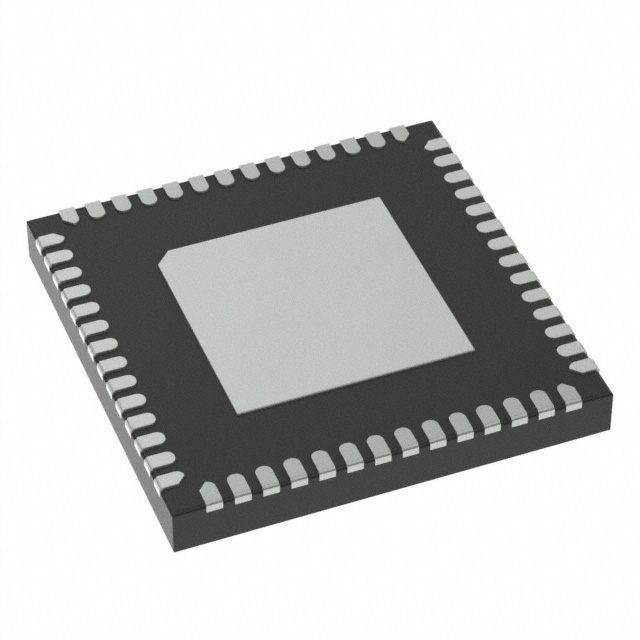
The MC34VR500VAES is available in a 56-VFQFN Exposed Pad package, designed for surface mounting with wettable flanks. Its applications include IoT gateways, mobile wireless routers, MFP printers, network-attached storage, and automatic teller machines.
| Qty | Low | High |
|---|---|---|
| 1+ | $0.75 | $0.75 |
Estimated market price range - modelled values for guidance only, not live distributor offers.
The buck converters have current ratings of 4.5A for SW1, 2.0A for SW2, 2.5A for SW3, and 1.0A for SW4 (VTT tracking regulator).
The operating voltage range is 2.8V to 4.5V.
The operating temperature range is -40°C to 105°C (TA).
It is supplied in a 56-VFQFN Exposed Pad package.
All regulators are controlled via I2C.