

| Distributor | Stock | Pricing | MOQ | PKG | Lead Time | Date Code | On Order Quantity | On Order Delivery | |
|---|---|---|---|---|---|---|---|---|---|
|
2,500 pcs
|
2500 pcs | On Request | 1 | On Request | On Request | On Request | On Request | On Request | |
|
780 pcs
|
780 pcs | On Request | 1 | On Request | On Request | 2021+ | On Request | On Request |
| Category | |
| Manufacturer Name | |
| Applications | |
| Control Interface | |
| Mounting Type | |
| Operating Temperature | |
| Supplier Device Package | |
| Supplier Package | |
| Voltage |
The NXP Semiconductors PF4210 (MC34PF4210A2ES) is a high-performance power management integrated circuit (PMIC) designed for audio and video applications, particularly those utilizing the i.MX 8M family of processors. It offers a highly programmable architecture with integrated power devices, minimizing external component requirements.
Key features include four to six buck converters, six general-purpose linear regulators, and a boost regulator capable of up to 5.0 V output. The device supports programmable output voltage, sequence, and timing, along with I2C control for individual on, off, and standby modes. It also includes an RTC supply and a coin cell charger.
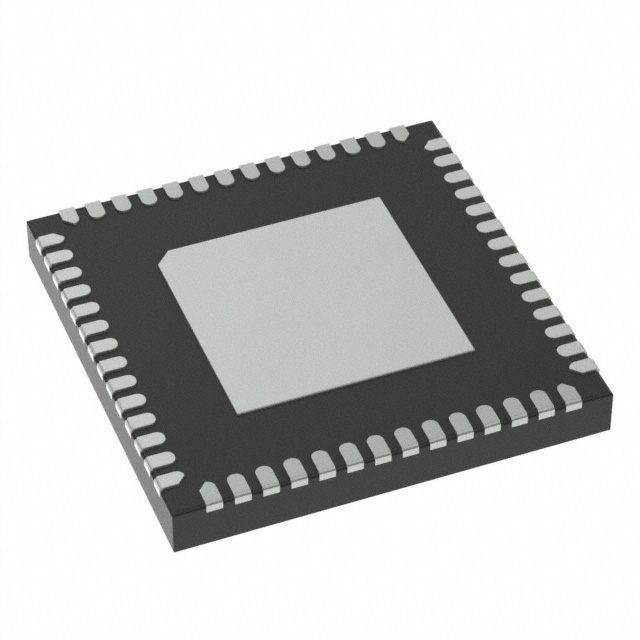
This PMIC is suitable for applications such as Over-The-Top (OTT) set-top boxes, wireless audio devices, voice recognition assistants, A/V receivers, and sound bars. It is available in a 56-VFQFN Exposed Pad package suitable for surface mounting.
The PF4210 is designed to power system components including application processors, memory, and peripherals, providing a comprehensive power solution for complex embedded systems.
| Qty | Low | High |
|---|---|---|
| 1+ | $0.75 | $0.75 |
Estimated market price range - modelled values for guidance only, not live distributor offers.
The operating voltage range is 2.8V to 4.5V.
-40°C to 105°C (TA).
56-VFQFN Exposed Pad (56-QFN-EP 8x8), surface mount with wettable flank.
Flexible configuration: four to six buck converters.
Six general purpose linear regulators.
Up to 5.0V.
Through an I2C interface.