

| Distributor | Stock | Pricing | MOQ | PKG | Lead Time | Date Code | On Order Quantity | On Order Delivery | |
|---|---|---|---|---|---|---|---|---|---|
|
2,459 pcs
|
2459 pcs | On Request | 1 | On Request | On Request | 2005 | On Request | On Request |
| Category | |
| Manufacturer Name | |
| Channel Type | |
| Channels per Circuit | |
| Input Signal | |
| Mounting Type | |
| Number of Circuits | |
| Operating Temperature | |
| Output Signal | |
| Output Type | |
| Propagation Delay | |
| Supplier Device Package | |
| Translator Type |
The MC100LVELT22DT from ON Semiconductor is a dual-channel translator that facilitates the conversion of LVTTL and LVCMOS logic levels to differential LVPECL signals. This device is engineered for applications requiring precise clock and data signal translation, offering a typical propagation delay of 350 ps and an output-to-output skew of less than 100 ps.
Operating within a supply voltage range of 3.15V to 3.45V, the MC100LVELT22DT is designed for use in systems that require a 3.3V power supply. Its dual-gate design and flow-through pinouts are optimized for low skew and ease of integration. The device is specified for operation across a temperature range of -40°C to 85°C.
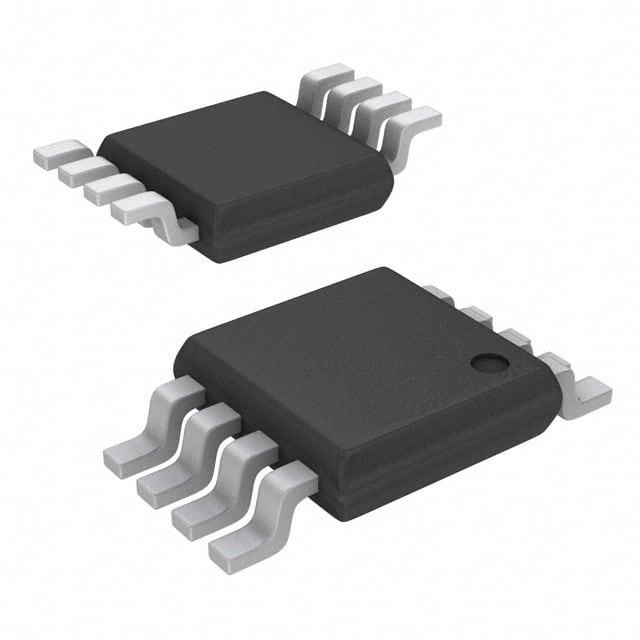
Packaged in an 8-TSSOP configuration, the MC100LVELT22DT is suitable for surface mount applications. The datasheet indicates that the device is Pb-Free and meets RoHS3 compliance standards. When an unused TTL input is left open, the corresponding Q output defaults to a high state.
| Qty | Low | High |
|---|---|---|
| 1+ | $0.12 | $0.12 |
Estimated market price range - modelled values for guidance only, not live distributor offers.
The nominal operating voltage is 3.3V, with an LVPECL operating range of 3.15V to 3.45V.
-40°C to 85°C.
It is available in an 8-TSSOP package (also 8-MSOP). Mounting type is Surface Mount.
Typical propagation delay is 350 ps.
Maximum output-to-output skew is less than 100 ps.
ESD protection is >4 kV (Human Body Model) and >200 V (Machine Model).
It translates LVTTL/LVCMOS signals to differential LVPECL signals.