

| Distributor | Stock | Pricing | MOQ | PKG | Lead Time | Date Code | On Order Quantity | On Order Delivery | |
|---|---|---|---|---|---|---|---|---|---|
|
15,876 pcs
|
15876 pcs | On Request | 1 | On Request | On Request | On Request | On Request | On Request | |
|
8 pcs
|
8 pcs | On Request | 1 | On Request | On Request | On Request | On Request | On Request |
| Category | |
| Manufacturer Name | |
| Count Rate | |
| Halogen Free | |
| Logic Type | |
| Mounting Type | |
| Number of Bits per Element | |
| Number of Elements | |
| Operating Temperature | |
| Propagation Delay | |
| Reset | |
| Supplier Device Package | |
| Supplier Package | |
| Trigger Type | |
| Voltage |
The MC100LVEL32DG is a 3.3 V ECL ÷2 divider from On Semiconductor. It operates with a supply voltage range of 3.0 V to 3.8 V in PECL mode and 0 V to -3.8 V in NECL mode. This device offers a typical propagation delay of 510 ps and a typical maximum frequency of 2.6 GHz.
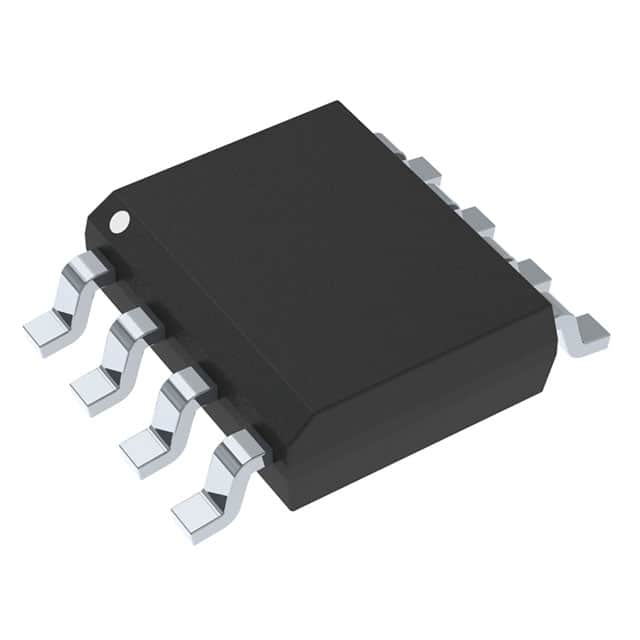
The MC100LVEL32DG includes an asynchronous reset pin for synchronization purposes. It is available in an 8-SOIC package and is designed for surface mounting.
Key electrical characteristics include a 510 ps propagation delay and a 2.6 GHz typical maximum frequency. The device supports both PECL and NECL operating modes, with specific voltage ranges for each. It also features internal input pulldown resistors and ESD protection exceeding 4 KV (Human Body Model).
This component is suitable for applications requiring high-speed signal division. Its 8-SOIC package and surface mount capability facilitate integration into various electronic designs.
| Qty | Low | High |
|---|---|---|
| 1+ | $0.50 | $0.50 |
Estimated market price range - modelled values for guidance only, not live distributor offers.
The operating voltage is 3 V to 3.8 V in PECL mode and 0 V with VEE = -3.0 V to -3.8 V in NECL mode.
The MC100LVEL32DG is available in an 8-SOIC package.
The operating temperature range is -40°C to 85°C.
Yes, the MC100LVEL32DG is RoHS3 Compliant.
The typical maximum frequency is 2.6 GHz.
The propagation delay is 510 ps.