

| Distributor | Stock | Pricing | MOQ | PKG | Lead Time | Date Code | On Order Quantity | On Order Delivery | |
|---|---|---|---|---|---|---|---|---|---|
|
1,786 pcs
|
1786 pcs | On Request | 1 | On Request | On Request | On Request | On Request | On Request | |
|
25 pcs
|
25 pcs | On Request | 1 | On Request | On Request | 05+16 | On Request | On Request |
| Category | |
| Manufacturer Name | |
| Clock Frequency | |
| Current | |
| ESD Protection | |
| Function | |
| Halogen Free | |
| Mounting Type | |
| Number of Bits per Element | |
| Number of Elements | |
| Operating Temperature | |
| Output Type | |
| Propagation Delay | |
| SVHC Present | |
| Supplier Device Package | |
| Supplier Package | |
| Trigger Type | |
| Type | |
| Voltage |
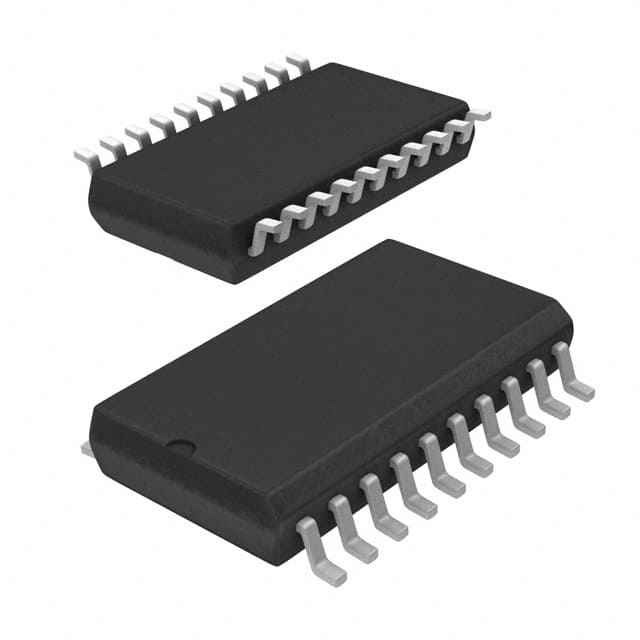
The MC100LVEL29DWG from On Semiconductor is a dual master-slave D-type flip-flop featuring fully differential data and clock inputs, as well as outputs. It boasts a high toggle frequency of 1100 MHz and typical propagation delays of 580 ps.
This device operates within a PECL mode voltage range of 3.0 V to 3.8 V (VEE = 0 V) or NECL mode from -3.0 V to -3.8 V (VCC = 0 V). It includes asynchronous overriding Set and Reset inputs, with the condition that Set and Reset cannot be HIGH simultaneously. The flip-flops are housed in a 20-SOIC package and are designed for surface mounting.
Key features include ESD protection exceeding 2 kV (Human Body Model), internal input pulldown resistors for stability under open input conditions, and temperature compensation inherent in the 100 Series. The device meets or exceeds JEDEC Spec EIA/JESD78 IC Latchup Test and is RoHS compliant and halogen-free.
| Qty | Low | High |
|---|---|---|
| 1+ | $0.86 | $0.86 |
Estimated market price range - modelled values for guidance only, not live distributor offers.
For PECL mode: VCC = 3.0 V to 3.8 V with VEE = 0 V. For NECL mode: VEE = -3.0 V to -3.8 V with VCC = 0 V.
The device is available in a 20-SOIC (0.295", 7.50mm Width) surface mount package.
The operating temperature range is -40°C to 85°C (TA).
The typical flip-flop toggle frequency is 1100 MHz (1.1 GHz).
The typical propagation delay is 580 ps.
Yes, the device has ESD protection of >2 kV (Human Body Model).
The device has complementary outputs (Q and Q-bar).