

| Distributor | Stock | Pricing | MOQ | PKG | Lead Time | Date Code | On Order Quantity | On Order Delivery | |
|---|---|---|---|---|---|---|---|---|---|
|
1,000 pcs
|
1000 pcs | On Request | 1 | On Request | On Request | On Request | On Request | On Request | |
|
380 pcs
|
380 pcs | On Request | 1 | On Request | On Request | On Request | On Request | On Request | |
|
75 pcs
|
75 pcs | On Request | 1 | On Request | On Request | On Request | On Request | On Request |
| Category | |
| Manufacturer Name | |
| Channel Type | |
| Channels per Circuit | |
| Input Signal | |
| Mounting Type | |
| Number of Circuits | |
| Operating Temperature | |
| Operating Voltage | |
| Output Current | |
| Output Signal | |
| Output Type | |
| Propagation Delay | |
| SVHC Present | |
| Supplier Device Package | |
| Translator Type |
The MC100EPT21MNR4G from On Semiconductor is a differential translator capable of converting LVPECL, LVDS, and CML input signals to LVTTL/LVCMOS output signals. This device requires only a +3.3V supply and ground for operation. It features a typical propagation delay of 1.4 ns and can handle frequencies greater than 275 MHz.
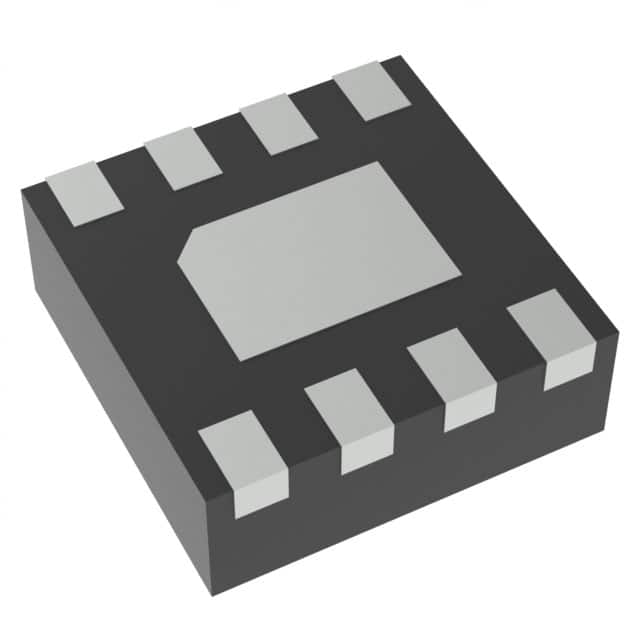
The translator is designed for unidirectional signal translation and operates within a temperature range of -40°C to 85°C. It is housed in an 8-DFN (2x2) surface-mount package, making it suitable for space-constrained applications that require clock or data signal translation.
Key electrical characteristics include 24 mA TTL outputs and ESD protection exceeding 1.5 kV (HBM). The VBB output is provided for flexible input coupling configurations, either single-ended or differential.
This translator is ideal for applications needing to interface between different logic families, such as in high-speed digital systems, communication infrastructure, and test equipment.
| Qty | Low | High |
|---|---|---|
| 1+ | $0.12 | $0.12 |
Estimated market price range - modelled values for guidance only, not live distributor offers.
The operating voltage range is 3.0 V to 3.6 V, with a nominal 3.3 V supply.
The typical propagation delay is 1.4 ns.
The maximum frequency is greater than 275 MHz.
It accepts CML, LVDS, and LVPECL differential input signals.
It provides LVTTL and LVCMOS output signals.
The operating temperature range is -40°C to 85°C.
It is available in an 8-DFN (2x2) package with an exposed pad, surface mount.