

| Distributor | Stock | Pricing | MOQ | PKG | Lead Time | Date Code | On Order Quantity | On Order Delivery | |
|---|---|---|---|---|---|---|---|---|---|
|
2,500 pcs
|
2500 pcs | On Request | 1 | On Request | On Request | On Request | On Request | On Request |
| Category | |
| Manufacturer Name | |
| Clock Frequency | |
| Current | |
| Function | |
| Mounting Type | |
| Number of Bits | |
| Number of Bits per Element | |
| Number of Circuits | |
| Number of Elements | |
| Operating Temperature | |
| Output Type | |
| Supplier Device Package | |
| Termination Style | |
| Trigger Type | |
| Type | |
| Voltage |
The ON Semiconductor MC100EP51DR2 is a differential clock D flip-flop with an asynchronous reset input. This device is designed for high-speed applications, supporting clock frequencies greater than 3 GHz with a typical propagation delay of 350 ps. It offers flexible operating ranges for both PECL (3.0 V to 5.5 V) and NECL (-3.0 V to -5.5 V) modes.
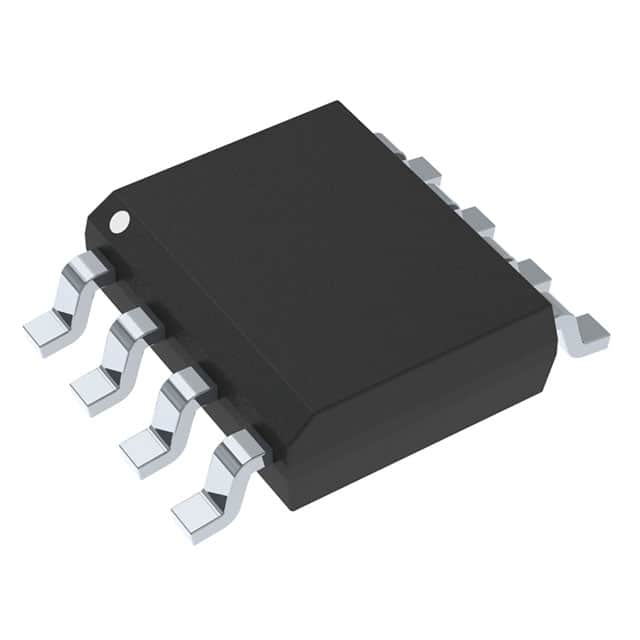
The MC100EP51DR2 features differential clock inputs for enhanced signal integrity and stability, with built-in clamp circuitry for open input conditions. The device enters data when the clock is low and transfers it to the outputs upon a positive clock transition, allowing for negative edge triggering. It is supplied in an 8-SOIC surface-mount package and operates over a temperature range of -40°C to 85°C.
This flip-flop is suitable for applications requiring fast digital signal processing and synchronization. Its robust design includes safety clamps on inputs and open input default states, ensuring reliable performance in various electronic systems.
| Qty | Low | High |
|---|---|---|
| 1+ | $0.86 | $0.86 |
Estimated market price range - modelled values for guidance only, not live distributor offers.
For PECL mode, VCC = 3.0 V to 5.5 V with VEE = 0 V. For NECL mode, VEE = −3.0 V to −5.5 V with VCC = 0 V.
8-SOIC (Small Outline Integrated Circuit) with gull wing leads for surface mount.
-40°C to 85°C ambient temperature.
350 ps typical per the datasheet.
Greater than 3 GHz typical.
Yes, with >2 kV Human Body Model, >200 V Machine Model, and >2 kV Charged Device Model.
Differential output, non-inverting.